

Top Brands Renowned For Their Quality Silk Scarves

The Popularity Of Silk Scarves
The most widely used fabric worldwide is silk. Everything from silk scarves to clothing uses it. No other material can compare to it in terms of comfort, toughness, or gorgeous texture.
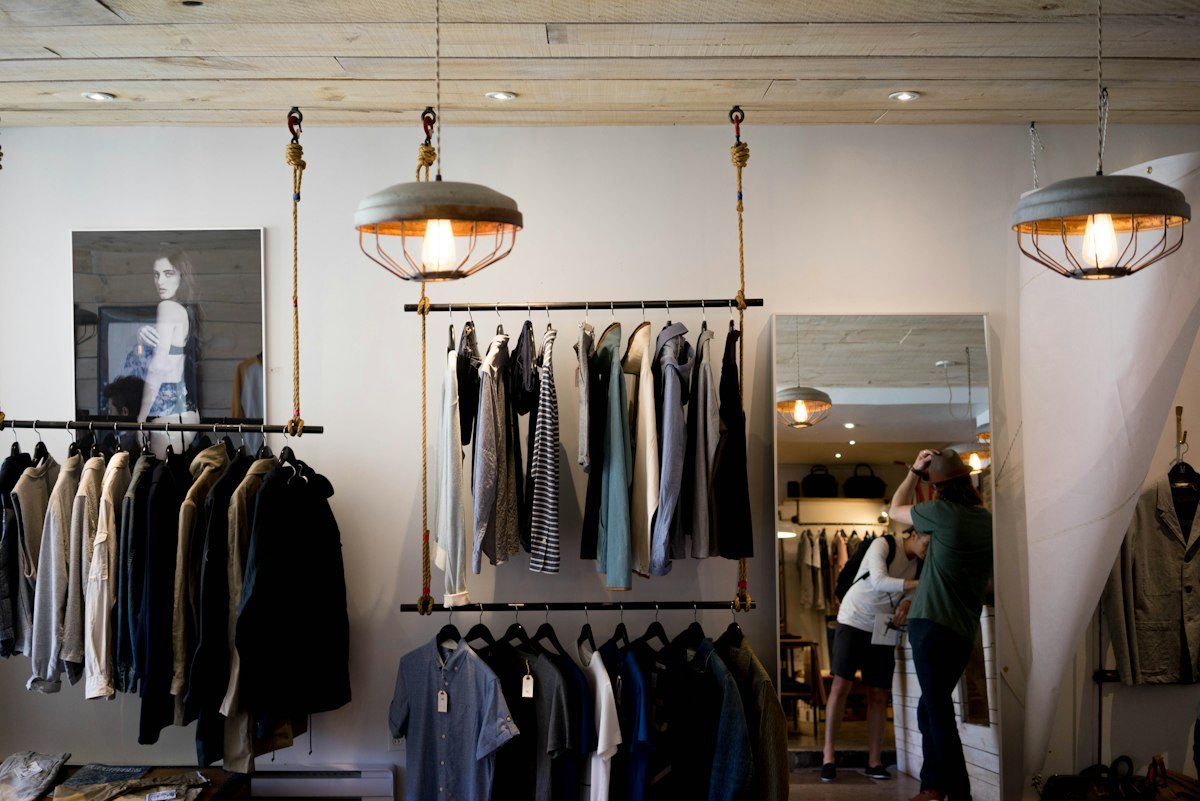
Due to its appealing look, feel, and durability, silk has been used as a fabric for clothes and scarves for ages. Silk scarves' growing appeal is a result of their numerous design and application options.
Historically, monarchs wore silk scarves as a status and wealth symbol. They are now offered in a wide range of hues and patterns to go with any look or situation. Silk scarves are available in a variety of patterns and hues, some of which include exquisite floral weavings, geometric prints, and abstract art. While some silk scarves only have fringes along one side, others have fringes on all three sides.
Silk scarves effortlessly boost one's appearance and radiate a feeling of sophistication whether they are worn casually or formally. Although there are many different kinds of scarves on the market, silk scarves stand out because of their remarkable quality and workmanship.
Silk scarves are incomparably silky and long-lasting, and they provide an unsurpassed level of luxury that no other material can match. But not every silk scarf is made equally. In this article, we explore the brands known for their quality silk scarves, comparing what each brings to the table in craftsmanship, materials, and design philosophy.
What Sets High-Quality Silk Scarves Apart?
Quality is extremely important when it comes to silk scarves, and several characteristics separate a truly excellent scarf from a mediocre one. Understanding these markers helps you shop with confidence, whether online or in person.
Silk Grade and Origin
The type of silk matters enormously. Mulberry silk, produced by Bombyx mori silkworms fed exclusively on mulberry leaves, is widely recognized as the finest silk for scarves. It has the longest, most uniform fibers, which produce the smoothest hand feel and most consistent sheen. Tussah (wild) silk, produced by silkworms that feed on oak and other leaves, has a slightly coarser texture and a naturally golden color. It is beautiful in its own way, but it does not achieve the same level of refinement as mulberry silk.
China produces roughly 80% of the world's raw silk, with the Zhejiang and Jiangsu provinces being the historical centers of production. India is the second-largest producer, known for its muga and eri silks. Italy and France do not produce raw silk in significant quantities, but both countries have centuries-old traditions of silk weaving and finishing that produce some of the world's finest scarves.
Momme Weight
Momme (pronounced "mummy") is the standard unit for measuring silk fabric weight. One momme equals approximately 4.34 grams per square meter. For scarves, the momme weight directly affects durability, opacity, and drape:
- 8-12 momme: Lightweight and sheer. Good for chiffon scarves and delicate neck wraps. Less durable, more prone to snags.
- 14-19 momme: The standard range for quality silk scarves. Good balance of weight, durability, and drape. Most branded scarves fall here.
- 19-25 momme: Premium weight. Richer drape, more substantial feel, excellent durability. This is what distinguishes luxury scarves from basic ones.
- 25+ momme: Heavy silk, typically used for pillowcases and bedding rather than scarves. Expensive and less common in accessories.
Edge Finishing
The way a scarf's edges are finished tells you a great deal about its quality. Hand-rolled hems are the hallmark of luxury silk scarves. A skilled artisan rolls a narrow edge of fabric by hand and stitches it with tiny, nearly invisible stitches. This process takes several hours per scarf and produces a soft, rounded edge with an organic, slightly irregular look that machine hemming cannot replicate.
Machine-rolled hems are faster and cheaper to produce. They are perfectly uniform but flatter and less refined. Many mid-range scarves use machine hemming and still offer good quality, but the hand-rolled edge remains the standard of true luxury.
Print Quality
How the design is applied to the silk affects both appearance and longevity. Screen printing, used by houses like Hermes, involves applying each color separately through individual screens, sometimes requiring 20 or more screens for a single design. The colors are rich, precisely registered, and deeply penetrated into the fiber.
Digital printing has become increasingly common and allows for photographic detail and unlimited color range. High-quality digital printing can be excellent, but cheaper versions use inks that sit on the surface rather than bonding with the fiber, leading to fading and cracking over time.
Brand Comparison: Established Luxury Houses
| Brand | Price Range | Momme | Origin | Specialty |
|---|---|---|---|---|
| Hermes | $400-$1,200+ | 20-25 | France (Lyon) | Screen printing, hand-rolled hems, collectible designs |
| Gucci | $250-$600 | 16-19 | Italy | Bold prints, logo-centric designs, fashion-forward |
| Salvatore Ferragamo | $200-$500 | 16-19 | Italy (Como) | Artistic prints, vibrant color palettes |
| Burberry | $200-$500 | 14-19 | UK / Italy | Heritage check patterns, British elegance |
| Furla | $100-$250 | 14-16 | Italy | Accessible luxury, coordinated with leather goods |
| Muriersilk | $30-$80 | 16-19 | China (direct) | Pure mulberry silk, hand-rolled hems, direct-to-consumer pricing |
Hermes
Thierry Hermes founded this French luxury house in 1837, originally producing saddles in Paris. Today, Hermes is perhaps the single brand most associated with silk scarves. Their iconic 90cm "carre" (square) scarf has been in production since 1937, and each new design is a significant cultural event in the fashion world.
Hermes scarves are produced in Lyon, France, the historic center of European silk weaving. Each design can take up to two years from concept to finished product. The silk is woven at their own looms, and the screen-printing process uses proprietary ink formulations that produce uniquely saturated colors. A single scarf may require 20 to 40 individual screens, each applied and dried separately. The edges are hand-rolled and hand-stitched by artisans who train for years in this specific technique.
The result is undeniably exceptional. Hermes scarves have become collectible items, with vintage designs regularly selling at auction for prices exceeding the original retail cost. For those who can afford the price, an Hermes scarf represents the pinnacle of the craft.
Gucci
Founded by Guccio Gucci in Florence in 1921, Gucci has become one of Europe's most recognized luxury brands with stores worldwide. Their silk scarves reflect the brand's broader design philosophy: bold, confident, and unafraid of making a statement. Expect large-scale prints, the iconic interlocking G logo, and rich color combinations.
Gucci scarves are produced in Italy using high-quality mulberry silk, typically in the 16 to 19 momme range. The craftsmanship is solid, though the brand places more emphasis on design impact than on the artisanal finishing techniques that define houses like Hermes. For someone who wants a recognizable luxury accessory that turns heads, Gucci delivers.
Salvatore Ferragamo
Over the years, Salvatore Ferragamo has grown into a global brand known for its Italian craftsmanship. Their silk scarves draw inspiration from art, nature, and architecture, often featuring painterly prints that resemble watercolors or oil paintings. The brand works with artisans in Como, Italy, one of the world's great silk-finishing centers, producing scarves with excellent color saturation and soft hand feel.
Furla
One of the most established brands in Italy, Furla has been in operation since 1927. Their silk scarves are offered in a variety of lengths and colors, often designed to coordinate with their popular leather handbag collections. Furla occupies the "accessible luxury" space, offering genuine silk at prices below the major fashion houses. They also have a range of silk scarves for both men and women.
Emerging Indie Brands Worth Knowing
The luxury silk scarf market has expanded significantly beyond the traditional fashion houses. A growing number of independent designers and direct-to-consumer brands are producing scarves that rival the quality of established names at a fraction of the price. Here are the types of indie brands reshaping the market:
Artist-Led Studios
A growing category of silk scarves comes from independent artists and illustrators who license or directly print their original artwork onto silk. These are limited-edition or one-of-a-kind pieces that function as wearable art. The silk quality varies, but the designs are often more creative and distinctive than what large fashion houses produce. Look for artists who specify their silk source and momme weight, as this indicates they are focused on quality, not just printing their art on the cheapest available fabric.
Direct-to-Consumer Silk Specialists
Brands like Muriersilk represent a significant shift in the market. By sourcing directly from silk-producing regions, cutting out layers of distribution and retail markup, and selling primarily online, these brands can offer pure mulberry silk scarves with hand-rolled hems at prices that would be impossible for brands operating through traditional retail channels. The quality difference between a $50 direct-to-consumer mulberry silk scarf and a $300 department-store branded scarf is often much smaller than the price difference suggests.
Sustainable and Ethical Silk Brands
A newer category focuses on peace silk (ahimsa silk), where the silkworm is allowed to emerge from its cocoon naturally rather than being killed in the process. Peace silk has a slightly different texture, with a more matte finish and a softer, less structured drape. Brands in this space often combine ethical silk sourcing with natural or low-impact dyes and transparent supply chains.
How to Evaluate Silk Quality When Shopping Online
Buying silk scarves online removes the ability to touch and feel the fabric, so you need to rely on other indicators of quality. Here is what to look for:
1. Silk type specified: A quality brand will state the specific silk type (mulberry, tussah, habotai, charmeuse, twill). If a listing just says "silk" or "100% silk" without specifying the type, it may be lower-grade silk or even a blend.
2. Momme weight listed: Serious silk brands publish their momme weight. If this information is missing, it is usually because the momme count is low (8-12) and the brand does not want to draw attention to it.
3. Edge finishing described: Look for specific mention of hand-rolled hems if the brand claims luxury status. Phrases like "finished edges" or "hemmed edges" without specifying hand-rolled usually indicate machine finishing.
4. Country of origin and manufacturing: The best silk scarves are either woven and finished in the same country (like Hermes in France) or sourced directly from top-tier silk producers (like Muriersilk from China's premier silk regions). Be wary of brands that are vague about where their silk comes from or where the scarves are assembled.
5. Close-up photography: Quality brands provide high-resolution photos that let you see the weave, the edge finishing, and the print detail up close. If a listing only shows distant lifestyle photos without any fabric detail shots, the brand may be hiding mediocre quality.
6. Return policy: A brand confident in its quality will offer a straightforward return policy. If returns are complicated or nonexistent, be cautious.
Price-to-Quality Ratio: Where the Real Value Is
The silk scarf market has a significant disconnect between price and quality at certain price points. Here is a realistic breakdown:
Under $20: At this price, you are almost certainly getting synthetic satin marketed as silk, or extremely low-momme silk (6-8) that will not last. The hems will be machine-sewn, and the prints will fade quickly. Not recommended if you want actual silk.
$30-$80 (best value zone): This is where direct-to-consumer brands like Muriersilk operate. At this price point, you can find genuine 16-19 momme mulberry silk with hand-rolled hems and quality printing. The value here comes from cutting out wholesale and retail markup, not from using cheaper materials. For most buyers, this range offers the best quality for the money.
$100-$250: The "accessible luxury" range, occupied by brands like Furla and lower-priced offerings from major fashion houses. The silk quality is generally good (14-19 momme), but a significant portion of the price goes to brand marketing, retail space, and distribution. The actual silk may not be meaningfully better than the $50-80 range.
$250-$500: Mid-luxury from brands like Gucci, Ferragamo, and Burberry. You are paying for brand prestige, distinctive designs, and the status associated with these names. The silk quality is excellent but not dramatically different from good mid-range brands.
$500+: The ultra-luxury tier, dominated by Hermes. At this level, you are buying into artisanal techniques (years-long design processes, proprietary inks, hand-rolled hems by specialists), collectible value, and the cachet of the brand. The quality is genuinely extraordinary, but the price premium over the next tier is largely about exclusivity and heritage.
What Makes Muriersilk Different
Muriersilk occupies a specific and intentional position in the silk scarf market. Here is what defines the brand:
Direct sourcing from China's silk heartland: Muriersilk works directly with silk farms and weaving facilities in China's premier silk-producing regions. This is not outsourcing to the cheapest available supplier. China has been producing the world's finest silk for over 5,000 years, and the expertise concentrated in regions like Zhejiang is unmatched globally.
Pure mulberry silk, no blends: Every Muriersilk scarf is made from 100% mulberry silk. There are no polyester blends, no "silk satin" (which often means polyester with a satin weave), no compromises on the raw material.
Hand-rolled hems: Even at the $30-$80 price point, Muriersilk scarves feature hand-rolled edges. This is possible because labor costs in China are lower than in France or Italy, but the artisan skill required is equally high. A hand-rolled hem is a hand-rolled hem regardless of the country it was made in.
Direct-to-consumer pricing: By selling primarily online and shipping directly from production facilities, Muriersilk avoids the 4x to 8x markup that traditional retail brands apply. The price you pay reflects the actual cost of materials and craftsmanship, not layers of wholesale margin.
Range and variety: Muriersilk offers square scarves, long scarves, skinny scarves, and ribbon scarves in a wide range of prints and colors, making it easy to find a style for any occasion or outfit.
Evaluating Craftsmanship: What to Look For in Any Brand
Regardless of the brand name on the label, these are the specific things to examine when assessing a silk scarf's craftsmanship:
Hold it up to light: Quality silk has an even, consistent weave with no thin spots, thick spots, or visible irregularities. The light should filter through uniformly.
Feel the edge: Run your finger along the hem. A hand-rolled edge has a soft, rounded profile with slightly irregular stitching. A machine hem is flat and perfectly uniform. Both can be well-executed, but hand-rolling indicates a higher level of investment in finishing.
Check color saturation: On a printed scarf, look at the back side. On quality screen-printed or well-executed digital-printed silk, the color penetrates through to the back, appearing as a slightly muted version of the front design. Cheap printing shows vivid color on the front and a washed-out or blank back.
The burn test (for verification): If you want to confirm that a scarf is genuine silk, carefully burn a tiny thread from an inconspicuous area. Real silk smells like burning hair (because it is a protein fiber), produces a black, crushable ash, and self-extinguishes when you remove the flame. Polyester smells chemical, melts into a hard bead, and continues burning.
The ring test: A genuine silk scarf in the 14-19 momme range can be pulled smoothly through a standard ring. The fabric compresses easily and slides without resistance. This test does not work for very heavy silk (25+ momme) but is a good quick check for lightweight and mid-weight scarves.
Frequently Asked Questions
Are expensive silk scarves always better quality than affordable ones?
Not necessarily. Price in the silk scarf market reflects brand prestige, retail markup, and marketing costs as much as it reflects material and craftsmanship quality. A $50 direct-to-consumer mulberry silk scarf with hand-rolled hems can match or exceed the silk quality of a $300 department store branded scarf. The key is to evaluate the silk type, momme weight, and finishing quality rather than relying on price as a proxy for quality.
How can I tell if a silk scarf is real silk or polyester?
Several tests help. The touch test: real silk feels cool to the touch initially and warms quickly, while polyester feels room-temperature and slightly slippery. The burn test: a thread of real silk smells like burning hair and produces crushable ash, while polyester melts into a hard bead. The ring test: real silk in standard momme weights pulls easily through a ring. The price test: if a "silk" scarf costs under $15, it is almost certainly polyester or a blend.
What momme weight should I look for in a silk scarf?
For most uses, 16 to 19 momme is ideal. This range provides a good balance of weight, drape, durability, and opacity. Lighter momme counts (8-12) are fine for very sheer, delicate looks but lack durability. Heavier counts (19-25) offer a more substantial, luxurious feel but can be too warm for summer wear. Hermes uses 20-25 momme for their signature scarves, which contributes to their distinctive weight and drape.
Is Hermes worth the price compared to brands like Muriersilk?
That depends entirely on what you value. If you are buying a silk scarf purely for the quality of the silk and the beauty of the design, direct-to-consumer brands like Muriersilk offer extraordinary value. If you value the collectibility, the heritage, the specific artisanal processes unique to Hermes (their proprietary inks, their multi-year design process, their Lyon workshops), and the social recognition of the brand, then Hermes offers something that no other brand replicates. Both are valid purchases for different reasons.
Where should I buy my first quality silk scarf?
If this is your first quality silk scarf, start in the $30-$80 range with a direct-to-consumer brand like Muriersilk that uses pure mulberry silk and hand-rolled hems. This lets you experience genuine high-quality silk without a large financial commitment. Once you understand what you like in terms of size, weight, print style, and how you prefer to wear it, you can make more informed decisions about whether to invest in higher-priced options.
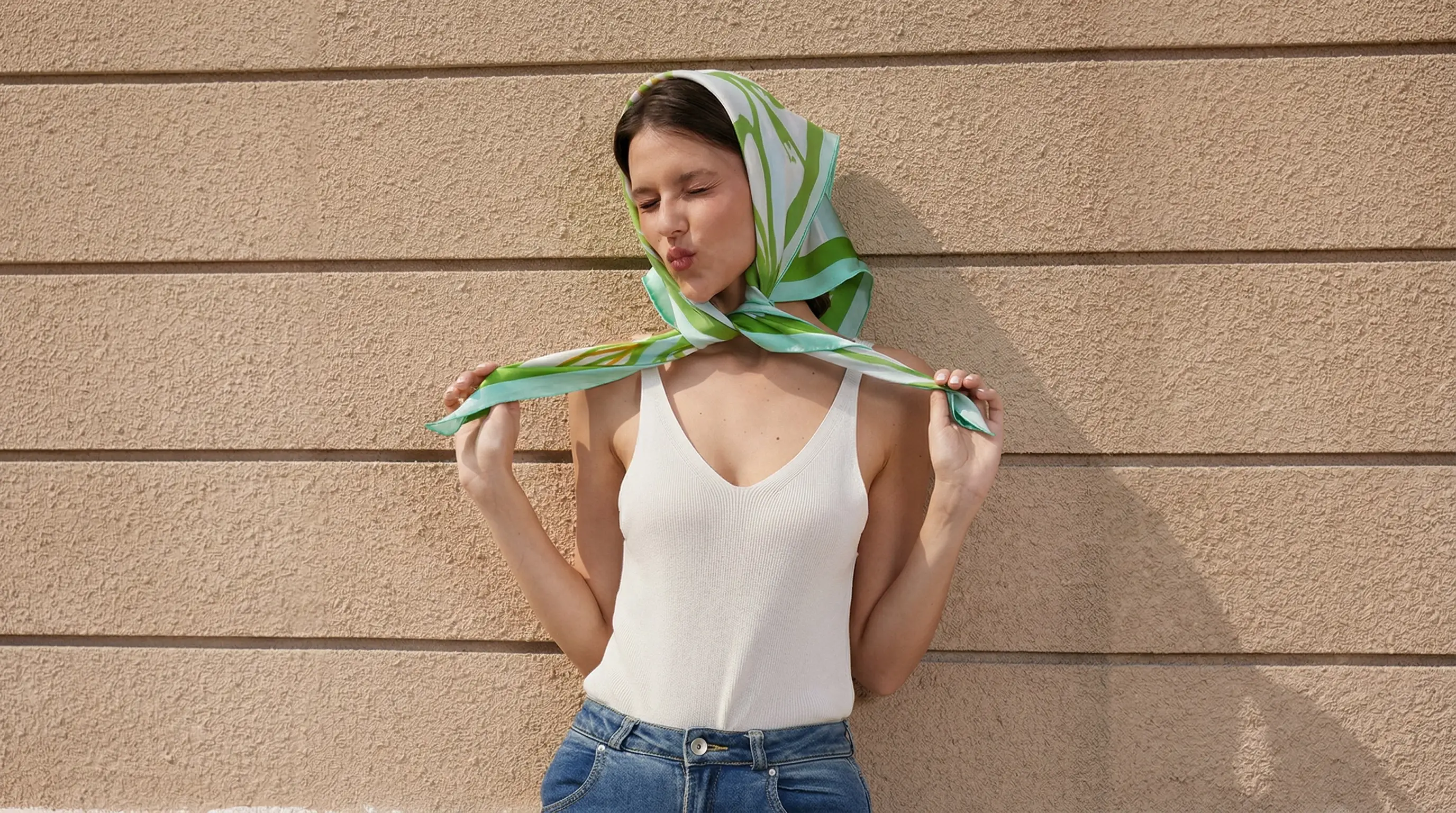
Shop the Collection
Browse Our Silk Scarves
Elegant mulberry silk scarves — square, bandana, shawl & skinny styles. Free shipping over $150.
