
Journal
What 6A Grade Silk Really Means (And When It Matters)
May 6, 2026
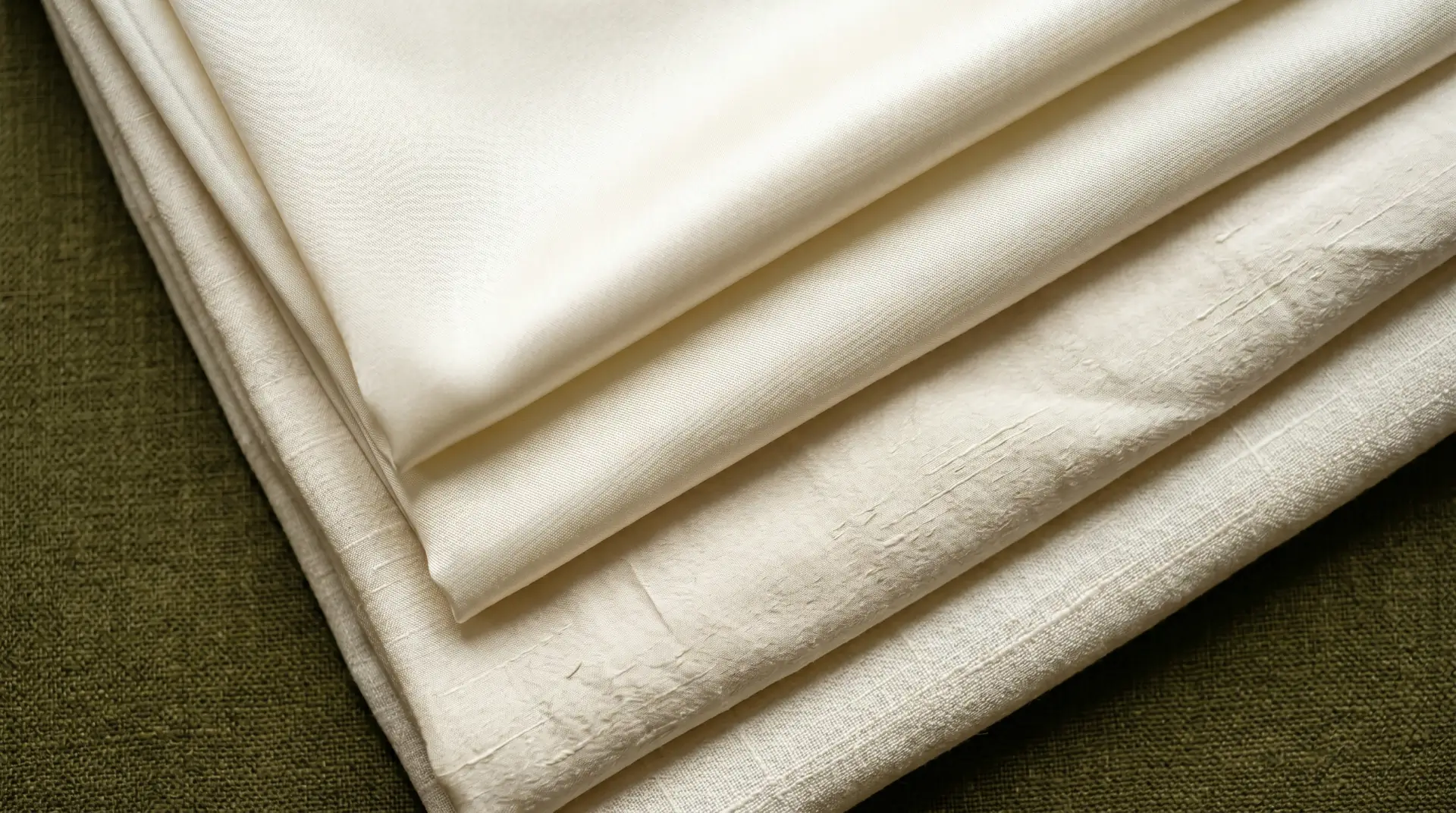
"6A grade silk" is industry shorthand — not a peer-reviewed standard. It signals a top-tier mulberry silk yarn graded by mills on fiber length, color uniformity, and visible defects, and most reputable bonnets, pillowcases, and pillowslips are spun from it. But the letter on the label means less than how it interacts with momme weight — and it pays to know exactly what is being claimed.
What 6A grade actually means
When a silk reel arrives at a Chinese or Indian sericulture cooperative, it is sorted before it is ever woven. The graders look at four traits: cocoon shell quality, raw filament length, defect count (loose ends, slubs, neps), and color uniformity. The cleanest, longest, most uniform reels are bundled and sold as "6A" — the highest tier in a six-tier scale that runs A → 6A. Below that sit 5A, 4A, 3A, 2A, and A grades, which are typically blended into spun silk or used in lower-cost weaves.
That is the cooperative-floor reality. What is missing — and worth being clear about — is any peer-reviewed or government standard that defines "6A" in writing. The international standard governing fiber identity is ISO 2076:2021, which establishes that "silk" is a regulated fiber name distinct from polyester satin or rayon. ISO 2076 does not mention 6A. Neither does ASTM. The A-grade scale is a Chinese-mill trade convention codified through repeat practice, not through a published technical specification.
So when you see "6A mulberry silk" on a product page, treat it the way you would treat "AAA-grade leather" or "AA-grade flour": a useful purchasing shorthand, not a scientific classification. It tells you the mill claims top-tier raw material. It does not tell you the finished fabric was independently tested to a written specification.
For more on how silk fits into regulated fiber identity vs trade convention, our silk momme weight guide walks through the parallel issue with momme as a Japanese-origin trade unit.
How 6A is graded — fiber length, color, defects
In practice, four observable traits separate 6A from lower grades.
Filament length. A single silkworm cocoon yields a continuous filament of roughly 600 to 900 metres. Cocoons that reel cleanly into long, unbroken strands produce 6A-grade raw silk. Cocoons that break or have to be joined — usually because the silkworm pierced the cocoon emerging as a moth — produce shorter filaments that get spun (twisted together) rather than reeled, and grade lower.
Color uniformity. Premium reels show a consistent ivory-to-cream tone across the bundle. Streaking, yellowing, or blue-grey patches drop the grade. The science here is well-established: silk is a protein fiber and the natural sericin gum and fibroin core take up dye unevenly when the raw color is inconsistent.
Visible defects. Slubs (thick spots), neps (tiny knots), and loose ends are counted per metre. 6A reels run cleaner than 1-2 defects per 50 metres. This matters when the silk goes onto an industrial loom — defects become snags, and snags become long-term wear points on a finished pillowcase or bonnet.
Cocoon shell weight and ratio. Heavier shells with more usable filament per cocoon grade higher.
What this grading does not measure: bacterial load, sericin retention, dye stability, or how the finished fabric performs against your skin. Those are separate quality details, and the most useful one for skin-contact silk is [fabric and finish documentation](https://www.fabric and finish documentation.com/en/our-standards/fabric and finish documentation-standard-100), which tests for over 1,000 unwanted finish residues in the finished textile. A 6A label tells you about the raw input. An fabric and finish documentation label tells you about the finished, ready-to-touch product.
6A vs other grades (3A, 4A, 5A) — real differences vs marketing
Walk a mill floor and you can sometimes feel the difference between 4A and 6A silk yarn between two fingers. In a finished, washed, hemmed pillowcase sitting in your hand, you almost certainly cannot.
Here is the honest breakdown:
- 6A vs 5A. Real, measurable difference at the yarn level — 5A has slightly shorter average filament length and 1-2 more defects per 100 metres. In a 22-momme woven pillowcase, the difference is rarely perceptible.
- 6A vs 4A. Larger gap. 4A is often spun (twisted short fibers) rather than reeled (continuous filament), and the resulting fabric has a duller hand-feel and more pilling under nightly use.
- 6A vs 3A or 2A. Significant. These grades end up in linings, fillings, and craft silk. Anything labeled "100% silk" at a $15 price point is almost always 3A or below.
The marketing trap is when "6A" gets used as a substitute for actually testing the finished fabric. A brand can buy 6A yarn and weave it badly, dye it with poor pH-balance, or finish it with cheap softeners that wash out in three cycles. Conversely, a brand using 5A yarn but doing its weaving and finishing well can produce a better daily-use product than a poorly-finished 6A piece.
So the practical rule: 6A is necessary for premium, but it is not sufficient. The full picture also needs momme weight, documentation (fabric and finish documentation), and a transparent care chain.
Why grade alone isn't enough — momme weight + thread count interaction
Two pillowcases can both be 6A grade and feel completely different — because they are woven at different momme weights.
Momme is the silk equivalent of cotton's thread count. It measures the weight of a 100-yard length of silk, 45 inches wide. A 19-momme silk pillowcase uses lighter yarn and weaves looser. A 22-momme pillowcase, the gold-standard for nightly skin and hair contact, weaves tighter and lasts longer. A 25-momme piece is dense enough to feel almost weighted.
This is where most online silk shopping goes wrong. A buyer sees "6A grade" and assumes it is the most important spec. In reality, the question stack is:
- Is it 100% mulberry silk? (Not satin, not "silky", not blended.)
- What is the momme weight? (For pillowcases: 22 momme is the standard. For light scarves: 12-16 momme.)
- What grade is the yarn? (6A is best, 5A is acceptable for budget pieces.)
- Is the finished fabric quality-checked or otherwise tested for chemical residues?
Get the first two right and a 5A pillowcase at the right momme will outperform a 6A pillowcase at 16 momme for nightly hair contact. Our momme weight guide has an interactive comparator that lets you scrub between 6mm and 25mm to see the difference.
How to verify 6A on a product page
Trade conventions have one inconvenient property: anyone can claim them. Here is what to look for as a buyer.
Match the claim to the rest of the spec sheet. A genuine 6A claim usually appears alongside a stated momme weight (19, 22, or 25), a fabric and finish documentation certificate number, and a country-of-origin (China — Hangzhou or Suzhou — or India). If the product page lists only "6A grade" with no other specs, the claim is likely cosmetic.
Look for the fabric and finish documentation number. fabric and finish documentation certificates are individually numbered and verifiable on the fabric and finish documentation label-check tool. A real number looks like XX.HCN.YYYYY. If the page shows the fabric and finish documentation badge but no number, ask customer service for it. A reputable brand will provide it.
Check the weave. Charmeuse weave (the standard for premium pillowcases and bonnets) has a distinct sheen on one side and a matte on the other. Habotai is lighter and used in scarves. If a product description avoids naming the weave entirely, that is a yellow flag.
Read the care label. 6A mulberry silk should be hand-wash or gentle-machine-cold safe with pH-neutral detergent. If a product allows hot water or aggressive detergent, the finishing chemistry is hiding cheaper inputs. Our silk care guide walks through what gentle silk care actually looks like.
Cross-check the price. A genuine 22-momme 6A mulberry silk pillowcase in 2026 typically retails between $60 and $150 depending on size and finishing. A "6A 22-momme" piece at $19.99 is mathematically incompatible with the actual cost of premium reeled silk and almost certainly polyester satin.
Is 6A worth paying more for?
Yes — but only when it is paired with the right momme weight and a credible documentation chain. The decision framework:
- For nightly-use items in skin-contact roles (pillowcases, silk bonnets, eye masks): 6A grade at 22 momme is worth the premium. The fiber length and defect-count benefits compound with daily use over years. See our best silk bonnets 2026 roundup for ones we have benchmarked.
- For occasional-use items (formal scarves, gift accessories): 5A at the right momme is a sensible value pick. The grade gap is rarely felt in items that see fewer than fifty washes in their lifetime.
- For decorative pieces (cushions, throws): grade matters less than visual finish. Pick on color and weave.
The one thing not to do: pay a 6A premium without verifying anything else. A product page that claims "6A grade" without mechanical specs (momme), a finishing documentation (fabric and finish documentation), or a reasonable price floor is asking you to trust a trade label without backup.
Frequently Asked Questions
Is 6A grade silk real or marketing speak? Both. The 6A scale is a real Chinese mulberry-silk trade convention used at sericulture cooperatives, but it is not codified in any ISO or ASTM standard. Treat it as honest shorthand when paired with momme weight and fabric and finish documentation testing, and as marketing when it appears alone.
What's the difference between 6A and 4A silk? 6A uses long, continuously reeled filaments with minimal defects. 4A is often spun from shorter fibers, has more visible defects, and produces a duller, less durable finished fabric. The gap is meaningful in nightly-use items, less so in occasional accessories.
Does 6A always mean longer fibers? Generally yes — long, unbroken filament length is one of the four traits that define 6A. But because the system has no enforcing body, length is graded by mill convention rather than a published threshold. If filament length matters to your decision, ask the brand directly.
Can synthetic satin be labeled 6A? No. 6A is, by trade definition, a grade of natural mulberry silk. Polyester satin marketed as "silk-like" or "silky satin" cannot legitimately use the 6A label. If a polyester product carries it, that is a labeling violation under ISO 2076:2021 fiber-naming rules.
Should I always pay for 6A? For pillowcases, bonnets, and eye masks worn nightly — yes, paired with 22 momme and an fabric and finish documentation number. For light scarves or formal accessories worn occasionally, 5A at the appropriate momme is a fair value pick. Match the grade to use intensity, not status.
Ready to put 6A grade into context? Start with our interactive momme weight guide to see how density changes the feel of silk at every weight, then explore our silk bonnet collection — every Muriersilk piece uses 6A mulberry silk at 22 momme, with fabric and finish documentation finishing.
General textile guidance only. Comfort varies by person and product; no fabric guarantees a sleep or medical outcome.