
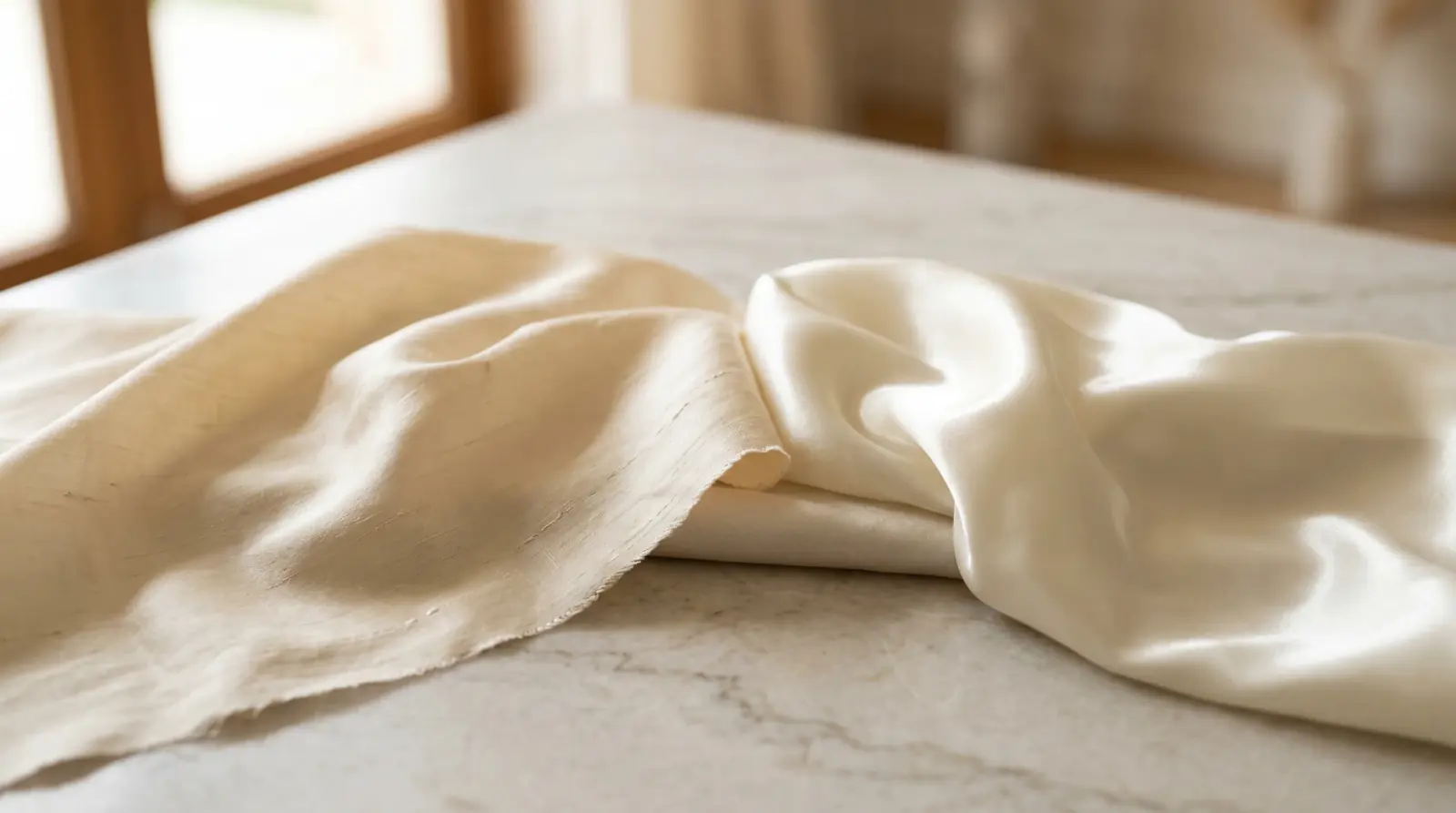
Silk is a fiber; satin is a weave that can be made from silk or other fibers. Compare the product label and construction rather than relying on the front-of-pack term alone.
Interactive guide
Silk vs Satin for Bedtime Comfort
Silk or satin: start with the label
A practical comparison for choosing a comfortable sleep accessory without universal performance claims.
Compare the details
Silk and satin, side by side
Silk
Silk is a fiber. Silk fabric can use satin, twill or other weaves.
Satin
Satin is a weave. Check whether its fiber is silk, polyester, nylon, rayon or another material.
Silk
A smooth silk surface can suit a low-friction routine. Weave, seams, fit and the individual product matter.
Satin
Satin can also feel smooth. Compare the actual surface and construction rather than the weave name alone.
Silk
Choose a comfortable fit and inspect dyes, seams and trims. Fiber content alone does not guarantee a skin outcome.
Satin
The fiber and finish affect how a satin product feels. A weave label does not establish suitability for sensitive skin.
Silk
Fabric weight, weave, lining, fit and room conditions all contribute to comfort.
Satin
Satin fabrics vary by fiber and construction. Compare the individual product in your sleeping environment.
Silk
Read the care label, particularly for printed silk, padding, elastic and mixed-material trims.
Satin
Care requirements depend on the fiber and construction. Satin does not automatically mean machine washable.
Silk
Compare verified composition, construction, finish and care requirements alongside the price.
Satin
Compare the actual fiber and construction. The weave name alone does not determine price or replacement life.
Silk
Check the supplier's stated sourcing and product-specific material information.
Satin
Satin can contain natural or synthetic fibers. Environmental claims need evidence about the actual product.
Silk
The feel and appearance vary with the silk weave, weight and finish.
Satin
Satin describes a smooth-faced weave. Its feel and appearance also depend on the fiber and finish.
What actually differs
Fiber and weave
Silk names a fiber. Satin names a weave. A satin product may use silk, polyester, nylon, rayon or another fiber.
Feel and comfort
Both can feel smooth. Breathability, warmth and hand-feel vary with fiber, weight, weave, construction and room conditions.
Care and value
Care requirements and durability depend on the actual material and construction. Compare verified specifications and the care label.
Does silk guarantee better sleep?
No textile guarantees a sleep outcome. A comfortable fit, light control, room conditions and personal preference all matter.
Is satin always synthetic?
No. Satin is a weave and can be made from several fibers, including silk. Check the fiber-content label.
Which should I choose?
Choose the verified fiber, construction, fit, care routine and price that suit your needs.
Choose for your own bedtime routine
Compare product-specific materials, fit and care before deciding.