
Silk Bonnet for Braids and Protective Styles: A Night Setup Guide

A silk bonnet for braids needs to work with the shape, length, and weight of your style rather than asking you to compress everything into a small space. Braids and other protective styles can place volume in different areas from one day to the next, especially as the style settles. A practical nighttime setup begins with room, even placement, and a closure that feels secure without creating pressure.
The point is not to create a complicated ritual. It is to make the bonnet easy to put on, easy to check, and comfortable enough that you are not repeatedly adjusting it after you get into bed. Start with the hair arrangement, then assess the bonnet in the position where you actually sleep.
Assess the shape of your style first
Before putting the bonnet on, take a moment to notice where your braids sit. Are most of them gathered at the nape? Is the length folded at the crown? Is one side carrying more weight? Those details affect the fit. A bonnet can slide or rotate when all of the volume is concentrated in one point, even if the edge feels snug.
For a bonnet for protective styles, the useful arrangement is usually the one that spreads the length enough for the bonnet to sit smoothly. Avoid forcing braids into a sharply tight pile just to get the bonnet over them. That can make the fabric bunch and can create a lump that presses into the pillow.
If your style is long, begin by guiding the length in the direction that feels most natural for your sleep position. You may prefer to let it lie down the back, gather it loosely, or distribute it around the inside. There is no single method that fits every braid pattern or head shape. The best indicator is whether the bonnet sits evenly and feels comfortable before you lie down.
Give length the room it needs
People often look for a long hair bonnet because the question is really about space. When braids are folded too sharply, the bonnet may feel full at the back and empty elsewhere. That imbalance can push the edge out of position over time.
Do a standing check first. Place the bonnet from front to back and make sure the edge lies flat. Then sit against a pillow. If you feel a large bundle behind your head, pause and redistribute the length rather than immediately tightening the closure. A small change in where the braids rest may make the whole setup feel more balanced.
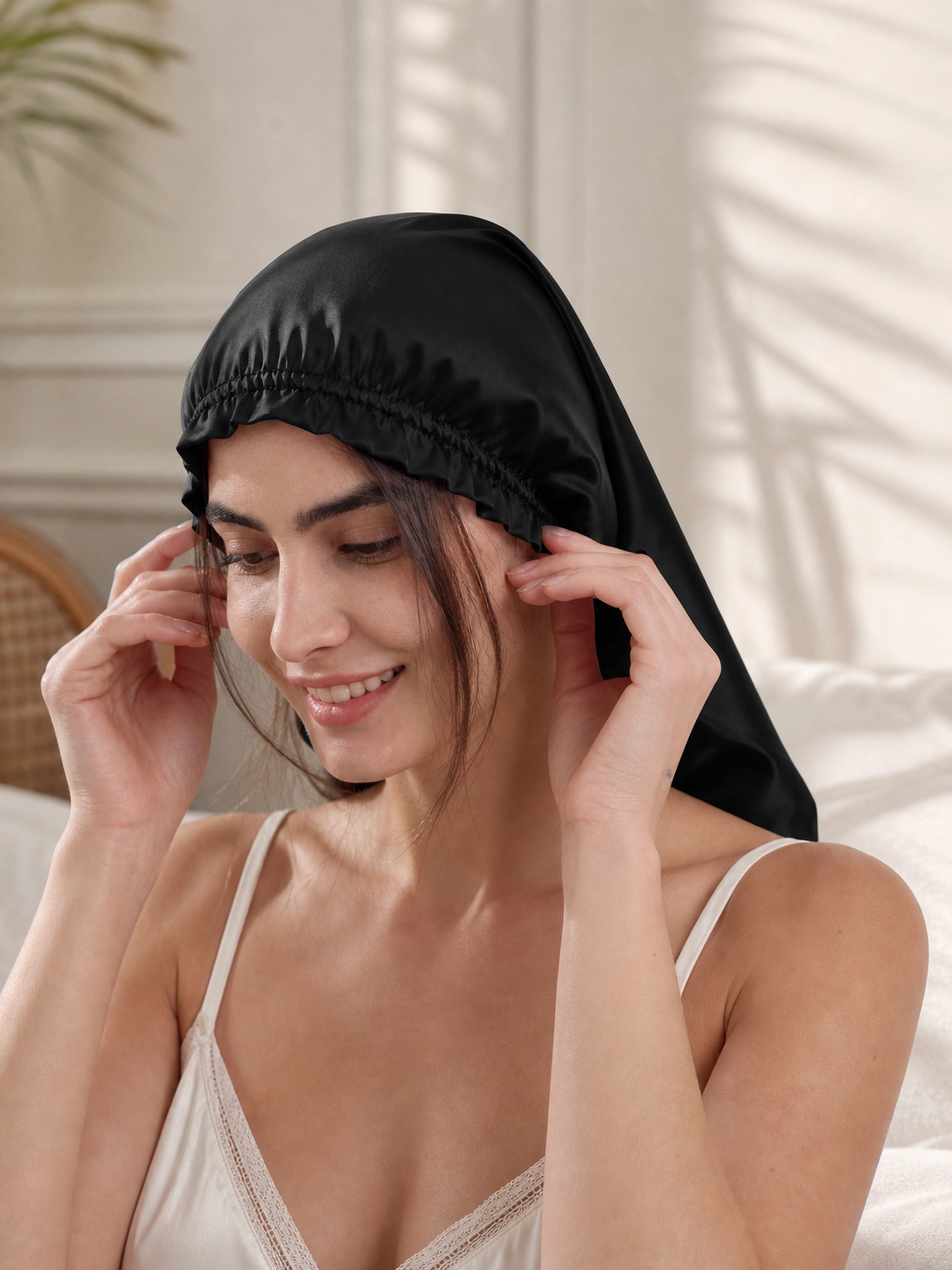
Do not pull the bonnet over braids in one fast motion. Use both hands to guide it into place so the edge does not catch a braid or twist. If a section is caught underneath, take the bonnet off and reset it. A clean restart is gentler than tugging the fabric into position.
Adjust for secure, not restrictive, hold
Shop the Collection
Shop our silk bonnets
Ruffled Reversible Silk Bonnet - 'SilkRuffle'Free shipping over $150
The closure should support the setup, not carry all the work. Once the braids are placed evenly, adjust the band or ties only enough to hold the bonnet where it belongs. A very tight edge is not a reliable answer to a bonnet that is unbalanced underneath.
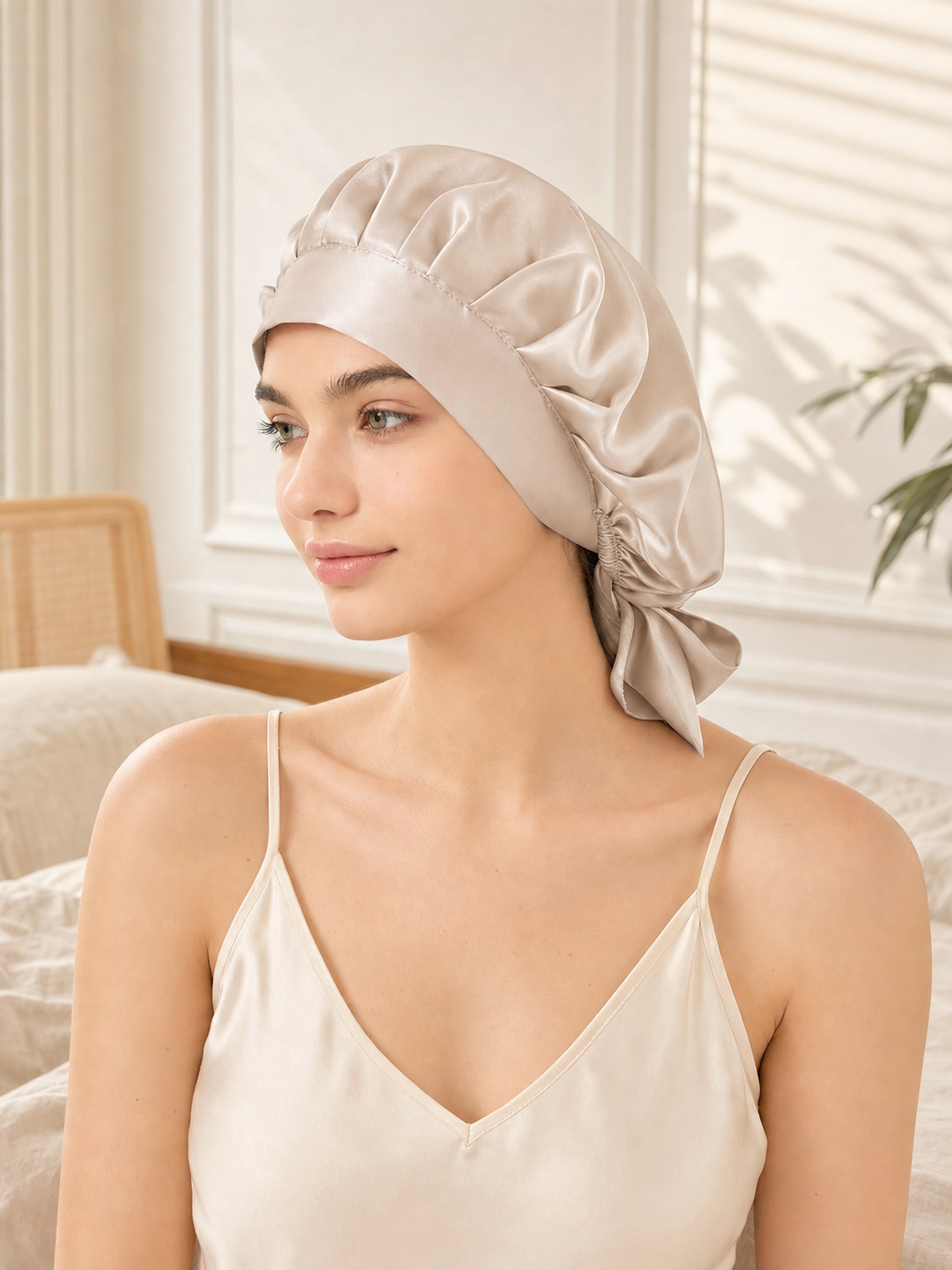
If your bonnet has ties, lay them flat and consider where the knot will land when you lie down. A knot placed directly against the pillow may shift the bonnet as you move. Repositioning the tie may help more than pulling it tighter. If your bonnet has an adjustable band, make a small adjustment, then check your comfort while turning your head.
A sleep bonnet for braids should still feel manageable after a few minutes in bed. If the closure pinches, presses, or makes you want to remove it immediately, the setup needs another look. Try spreading the braids more evenly or changing the bonnet placement before increasing tension.
Build the check into your evening routine
A repeatable sequence makes fit problems easier to identify:
- Make sure the bonnet is clean, dry, and not twisted.
- Arrange braids loosely so the volume is not all in one place.
- Place the bonnet slowly, keeping the edge flat.
- Adjust the closure for a gentle, steady hold.
- Lie in your usual sleep position and notice any lump, pull, or shift.
That last step matters. A bonnet may look settled in the mirror but move when the back of the head meets a pillow. If it shifts, change one thing at a time. Move the length, then check the placement, then revisit the closure. This avoids the frustration of making several changes without knowing which one helped.
Consider the rest of your routine
Hair products, moisture, and the condition of the bonnet can affect how it feels. If you use products with your style, allow them to settle when possible and inspect the inside of the bonnet in the morning. Visible transfer, a persistent scent, or a changed feel is a cue to follow the care label and clean the item when needed.
Silk is a fibre, while satin is a weave. That terminology is useful when you are comparing materials, but it does not replace the care instructions for the specific bonnet. Do not assume every product can be cleaned in the same way. Follow the label, avoid rough handling, and make sure the bonnet is fully dry before putting it away.
Storage helps, too. Air the bonnet after use, then keep it in a clean, dry spot away from open hair products or damp towels. A drawer or breathable pouch is often easier than leaving it on a crowded bathroom surface. This is a small habit, but it makes it easier to begin the next night with a bonnet that is ready to wear.
Do not judge the fit by one night alone
Braids can settle and move over time. A setup that feels different after a few days does not necessarily mean the bonnet has stopped working. Check whether the style has shifted, whether the length is now sitting elsewhere, or whether a product night has changed the surface feel.
Use the same fit test when you make an adjustment. Stand, turn your head, lie down, and observe. If the bonnet consistently slides in one direction despite careful placement, the shape or closure may not be the best match for your current style. Note the practical issue—more room for length, a different closure position, less bulk at the crown—so you can compare options with purpose.
Keep expectations routine-based
A silk bonnet for braids can be a useful part of a nighttime hair routine, but it is not a medical treatment and it cannot guarantee a particular outcome for every person or style. Comfort and friction can feel different depending on hair, products, sleep movement, and fit. Keep the claim modest: choose a setup that contains your style comfortably and is easy to care for.
That perspective makes the routine more sustainable. You are not trying to achieve a perfect result every night. You are creating a repeatable bedtime check that respects the shape of your braids and the care requirements of the item.
Frequently Asked Questions
Only as much as needed for a comfortable fit. Avoid a sharply packed bundle; spread the length so the bonnet can sit evenly.
The braid volume may be concentrated in one area, the edge may be uneven, or the closure may be doing too much work. Adjust one variable at a time.
Follow your normal hair routine and the bonnet’s care label. If moisture or product transfers to the fabric, inspect and clean it as directed.
Air it first, then keep it clean and dry. Do not store it damp or pressed against open products. For options to compare against your length and closure preference, see the [Muriersilk silk bonnet collection](/categories/silk-bonnet).
Shop the Collection
Shop our silk bonnets
Free shipping over $150