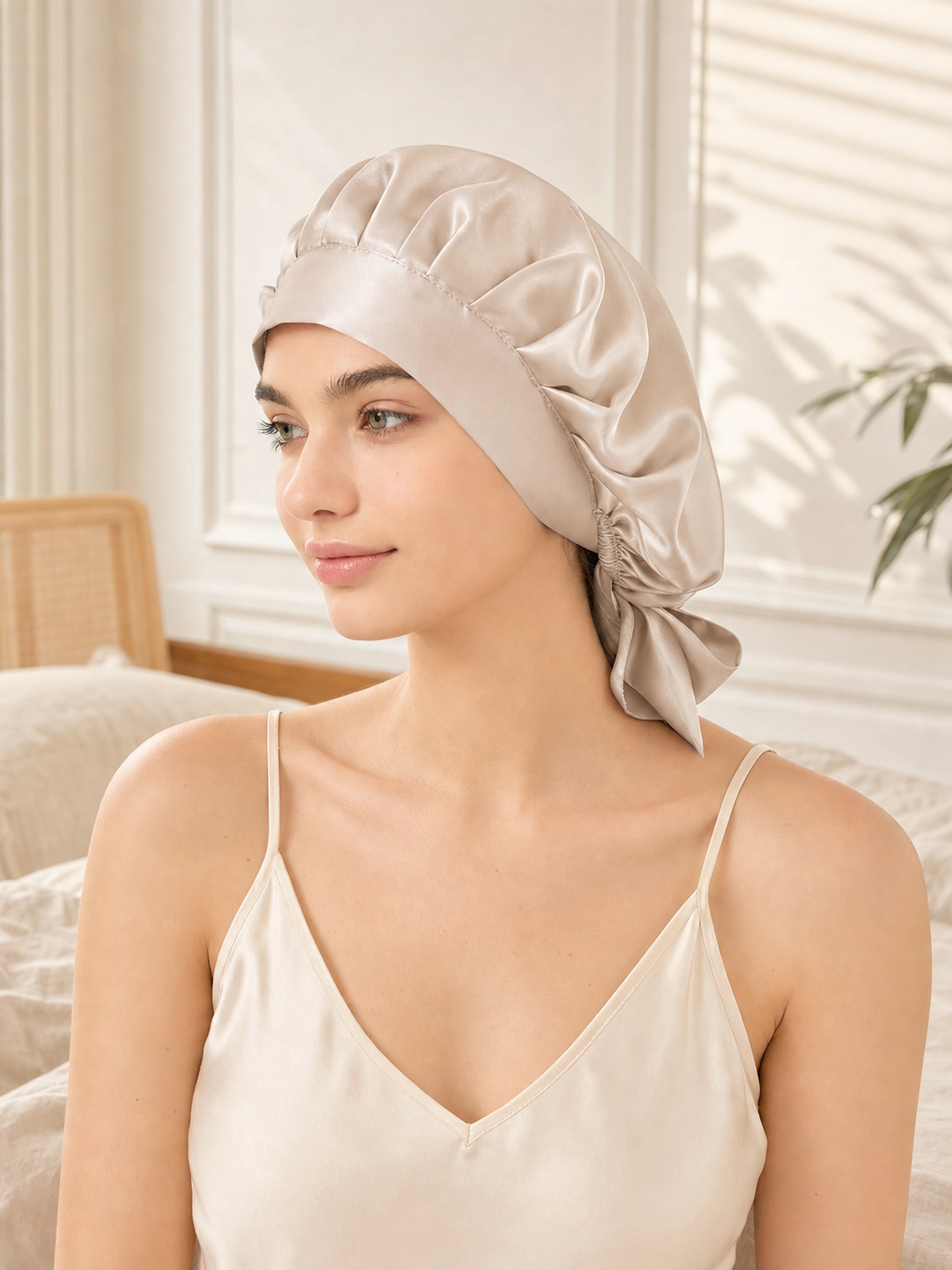

How to Store Silk Bonnet Between Washes

Learning how to store silk bonnet between washes is mostly about creating one clean, dry place for it to go after use. The goal is not to create a display-worthy storage system. It is to avoid the small problems that make an otherwise simple sleep accessory feel less fresh: trapped moisture, product transfer, a crushed band, or a bonnet that disappears into a pile of laundry.
Start with the condition of the bonnet when you take it off. If it is dry and looks clean, give it some air before putting it away. If it has visible product residue, a persistent scent, or feels damp, follow the product care label instead of storing it for another night. A storage habit works best when it includes this brief check rather than treating every morning the same.
Silk is a fibre, and care should be based on the label attached to the particular item. Satin refers to a weave, so neither word alone tells you how an item should be washed or dried. The guidance below is about keeping a dry, clean bonnet organised between uses; it does not replace the care instructions supplied with it.
Begin with a two-minute reset
When you remove the bonnet, turn it over in your hands and look at the inside first. That is the surface that has been against your hair. Check for product marks, hair pins left inside, tangles around a tie, or a damp area from a warm night. Then look at the outside and the band or closure. This takes less time than looking for the bonnet again at bedtime.
If everything looks clean and dry, gently reshape the bonnet. Straighten a twisted band or tie without pulling it taut. Let the fabric rest in its normal shape rather than stuffing it into a pocket. If it needs cleaning, set it aside somewhere safe and refer to the care label when you have time. Avoid leaving it in a damp bathroom or on the floor while waiting; both places invite more cleaning work later.
This reset also makes it easier to notice a change in your regular routine. A bonnet used after a light, dry hair routine may only need airing. One used after a heavier product night deserves a closer look before it goes back into storage.
Air it before closing it away
The easiest answer to how to store silk bonnet is often to air it first, then place it in a clean drawer, shelf, or pouch. Choose a spot away from steam, direct heat, and open hair products. A bedside drawer can work well if it is clean and not packed with chargers, cosmetics, or loose items. A shelf in a dry room is another straightforward choice.
Give the bonnet enough space that air can reach it. You do not need a special rack. Laying it flat on a clean surface for a while, or placing it loosely over a clean hanger, can be enough. The important point is not to seal it into a pouch or bag while it is still damp from use.
Do not confuse airing after use with drying after washing. If you have washed the bonnet, follow the care label for drying and make sure it is completely dry before storage. “Air dry silk bonnet” is a useful reminder to avoid rushing the process, not a substitute for the item’s own instructions.
Choose a pouch only after the bonnet is dry
Shop the Collection
Shop our silk bonnets
Ruffled Reversible Silk Bonnet - 'SilkRuffle'Free shipping over $150
A pouch can make clean bonnet storage easier, especially in a shared room, small home, or travel bag. It protects the bonnet from dust and helps keep its shape. But a pouch is for a dry bonnet. Closing a recently worn item into a sealed space can trap moisture and leave it smelling stale by the next use.
Choose a clean pouch that is large enough for the bonnet to rest without being tightly folded. You do not need to pack it like a parcel. Let the band lie naturally and avoid sharp folds through the main fabric. If the bonnet has ties, place them loosely alongside it rather than knotting them around the item.
A plastic bag is not an ideal permanent home for a bonnet that has just been worn. If you need one briefly while travelling, make sure the bonnet is clean and fully dry first, then take it out to air when you arrive. For everyday storage, a dry drawer or breathable pouch is simpler.
Keep products and tools at a distance
Storage is also about what sits near the bonnet. Keep it away from open jars, hair oils, sprays, brushes, heated tools, and perfume. These do not need to touch the fabric directly for a spill or transfer to become a nuisance. A dedicated spot reduces the chance that you will find residue only when you are ready for bed.
It is also sensible to check the storage area now and then. Wipe out a drawer when it collects dust, remove old tissues or hair clips, and make sure a pouch has not picked up makeup or product residue. That keeps the environment ready for the bonnet rather than turning storage into another item on a long cleaning list.
Store it in shape, not under pressure
Bonnet storage does not have to be precious, but it should avoid needless pressure. Do not leave it under a stack of books, at the bottom of a packed bag, or crushed in a tight drawer. A band that is repeatedly bent or stretched around other items may be harder to position comfortably at night.
Lay the bonnet flat when there is room. If not, fold it loosely along its natural shape and avoid creating hard creases. Put closures and ties inside the bonnet or alongside it so they do not catch on other belongings. Before using it again, give the fabric a small shake and straighten the band with your fingers.
This matters most if you use the bonnet often. A short daily reset is easier than trying to correct a tangled, compressed item after several weeks of neglect.
Separate storage from washing decisions
Storage does not extend the life of a dirty bonnet. It simply helps a clean, dry one stay ready between washes. Build washing decisions around signs such as visible product transfer, a lingering scent, a spill, or the specific schedule that the care label supports. There is no need to wash it every time it leaves the drawer, and there is no benefit in ignoring residue because it has been stored neatly.
When you do clean it, return to the label. It is the authority for water temperature, washing method, and drying. Avoid strong spot treatments or a rough scrub just because you spotted a mark after storage. Gentle, item-specific care is more useful than a generic trick.
A travel version of the same routine
When travelling, pack a clean, completely dry bonnet in a clean pouch or a separate compartment. Keep it away from shoes, toiletries, and items that may leak. At your destination, take it out and give it a little air before use. If it was worn during the trip, repeat the usual check before packing it home.
Travel does not require a separate system. It only asks you to be a little more deliberate about moisture and what the bonnet touches in a crowded bag.
Make bedtime easier for tomorrow
Store the bonnet where you can reach it without turning on every light or searching through clothes. If you use it as part of a regular sleep routine, place it near the other things you use before bed, but not in the same unprotected pile. A simple location cue makes the routine more likely to happen on busy nights.
You can leave a small clean surface or open pouch nearby for the morning airing step, then put the bonnet away later. This is especially helpful if you usually leave home quickly after waking. The system does not have to be perfect; it just needs to keep the bonnet from getting trapped under bedding or mixed into laundry.
Frequently Asked Questions
Only if it is clean and fully dry. Let it air out first if it feels warm or damp.
Use a dry cupboard rather than an open area near steam. Moisture can make storage less fresh.
If space is limited, fold it loosely and avoid sharp creases or pressure on the band.
Check it regularly and clean it if it has dust, product residue, or a spill. The bonnet should go back only into a clean, dry space. For a bonnet to add to your own care routine, see the [Muriersilk silk bonnet collection](/categories/silk-bonnet).
Shop the Collection
Shop our silk bonnets
Free shipping over $150