
Journal
Do Silk Scrunchies Leave Dents in Hair?
December 14, 2023

Scrunchies have made a major comeback in recent years, with silk scrunchies emerging as one of the most popular options. Known for their soft, smooth texture, silk scrunchies have become a go-to hair accessory.
The scrunchie first rose to popularity in the 1980s and 1990s, often being made out of fabrics like cotton. After falling out of fashion in the early 2000s, the scrunchie has revived itself in a big way. This resurgence has been led by models like Hailey Bieber and the rise of Y2K fashion trends.
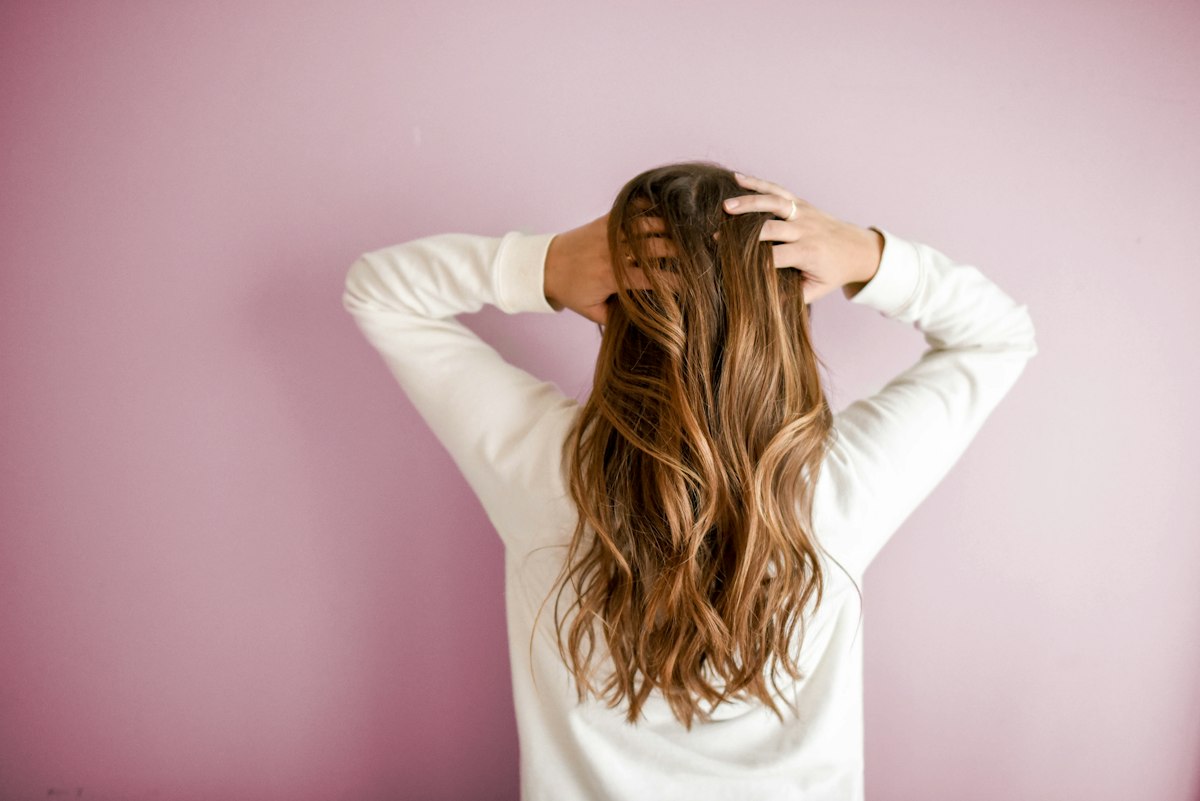
While scrunchies today come in all types of fabrics, silk has become one of the most coveted. The smooth silk material glides gently onto hair, avoiding damage and breakage. For many, the silk scrunchie offers a nostalgic callback to earlier decades with a modern twist.
What Are Silk Scrunchies, Exactly?
silk scrunchies are hair ties made from silk fabric encasing an elastic band. Unlike traditional hair elastics that press a thin rubber or elastic strip directly against your hair, a silk scrunchie wraps the elastic inside a generous tube of silk fabric. This creates a wider, softer surface area that distributes tension across more hair strands rather than concentrating pressure in a narrow line.
The silk fabric used is typically mulberry silk, chosen for its softness, luster, and durability. Mulberry silk is made from the cocoons of Bombyx mori silkworms, cultivated specifically for high-quality silk production. Less expensive silk scrunchies may use habotai silk, a lighter, plainer weave. Some scrunchies marketed as "silk" are actually satin polyester — always check the material label to confirm you are getting genuine silk.
The construction matters too. A well-made silk scrunchie has enough excess fabric to create a gathered, voluminous look when in the hair, and the elastic inside should be firm enough to hold a ponytail but not so tight that it defeats the purpose of using silk in the first place.
The Science of Hair Elastic Tension and Dent Formation
To understand whether silk scrunchies leave dents, you first need to understand how dents form in hair. A dent or crease is a temporary deformation of the hair shaft caused by sustained pressure in one spot.
Hair is composed of a protein called keratin, arranged in three layers: the outer cuticle (overlapping scales), the cortex (the main structural body), and sometimes a central medulla. When a hair elastic presses against the hair shaft, it compresses the cortex and forces the cuticle scales to flatten or shift in that area. Hold this pressure long enough, and the hair "remembers" the compressed shape when the elastic is removed. That is the dent.
Three factors determine how pronounced a dent will be:
- Pressure per square area: A thin elastic concentrates all its holding force on a narrow band of hair. A wide scrunchie distributes the same holding force across a much larger area. Lower pressure per point means less deformation of individual hair shafts.
- Duration: A ponytail worn for 30 minutes produces a faint, quickly-disappearing mark. The same ponytail worn for 8 hours produces a deep dent that can take hours to relax out. Time amplifies the effect of any hair accessory.
- Hair moisture level: Damp or wet hair is more pliable and "sets" more easily into whatever shape pressure forces it into. This is why hair that was wet when you put it up has more pronounced dents than dry hair held the same way for the same time.
Why Silk Scrunchies Cause Fewer Dents
Silk scrunchies reduce denting through two mechanisms:
Surface area distribution: The gathered silk fabric creates a wide, cushioned contact area. Instead of a sharp line of pressure from a thin elastic, the force is spread across an inch or more of soft fabric. This dramatically reduces the pressure per square millimeter on any individual hair strand, resulting in minimal compression of the hair cortex.
Low friction coefficient: Silk has one of the lowest friction coefficients of any natural fabric. When hair shifts slightly within a scrunchie, the silk allows the strands to slide and redistribute rather than catching and holding them in a fixed, compressed position. With a cotton scrunchie or rubber elastic, the high friction locks hair in place, amplifying the dent effect. With silk, the hair retains more of its natural movement even while held.
The result: silk scrunchies can still leave a very faint mark if worn tightly for many hours, but the mark is significantly less pronounced than what a traditional elastic or even a cotton scrunchie would produce under the same conditions.
Do Scrunchies in General Cause Dents?
Compared to hair ties and elastics, all scrunchies are wider and made from more flexible, fabric material. This distributes tension across more hair when gathering it up, rather than concentrating it in one focused area. The wider surface area and fabric construction make scrunchies less likely to leave dents than slim elastics or ties.
Scrunchies can still potentially leave some temporary marks if worn for prolonged periods or used to create very taut styles. But in general, scrunchies do not tend to leave lasting dents or crimps like other hair accessories when worn loosely for short periods. The fabric and volume help diffuse tension across more hair evenly.
Among all scrunchie types, silk produces the least denting due to its smoothness and low friction. Cotton scrunchies are a step up from bare elastics but their textured surface grips hair more firmly. Satin polyester scrunchies come close to silk's performance but lack the moisture-management properties of genuine silk fiber.
Silk vs. Velvet vs. Satin: A Scrunchie Material Comparison
| Feature | Silk | Velvet | Satin (Polyester) |
|---|---|---|---|
| Dent prevention | Excellent — lowest friction, widest pressure distribution | Fair — soft but high friction from pile texture | Good — low friction surface, but less give than silk |
| Hair breakage | Minimal — smooth surface prevents snagging | Moderate — pile can catch fine or damaged hair | Low — smooth surface similar to silk |
| Moisture absorption | Low — does not absorb hair oils or products | Moderate — cotton velvet absorbs some moisture | Very low — polyester repels moisture |
| Hold strength | Moderate — may slip on very fine hair | Strong — pile creates excellent grip | Moderate — similar to silk |
| Breathability | Excellent — natural fiber allows airflow | Poor — thick pile traps heat | Poor — synthetic fiber blocks airflow |
| Temperature regulation | Adapts to body temperature | Insulating — can feel warm | None — static feel |
| Durability | Good with proper care | Moderate — pile can crush over time | Very durable — resists wear |
| Price range | $8-$25 | $5-$15 | $3-$10 |
| Best for | All hair types, especially fine, damaged, or curly hair | Thick hair that needs strong hold | Budget-friendly smooth option |
The bottom line: velvet scrunchies grip the best and work well for thick hair that tends to slip out of other accessories, but they cause more friction and denting than silk. Satin polyester scrunchies are an affordable alternative to silk with a similar smooth surface, but they lack silk's natural breathability, temperature regulation, and moisture-management properties. Silk scrunchies are the best all-around choice for hair health, comfort, and dent prevention.
Scrunchie Size Guide by Hair Type
Not all scrunchies work equally well for all hair types. The size and construction of the scrunchie should match your hair's thickness, texture, and length for the best results:
Fine, straight hair: Use a small to medium silk scrunchie (diameter 3 to 4 inches / 8 to 10 cm). Fine hair slips out of oversized scrunchies easily. Look for scrunchies with slightly firmer elastic inside to maintain hold without excessive tightness. A skinny silk scrunchie (minimal gathered fabric) provides the most secure hold on fine hair.
Medium-thickness, wavy hair: A standard-size silk scrunchie (diameter 4 to 5 inches / 10 to 13 cm) works well. Medium hair has enough body to fill the scrunchie and maintain a comfortable hold. This is the most common hair type and the one for which most scrunchies are designed.
Thick, curly, or coily hair: Choose a large or extra-large silk scrunchie (diameter 5 to 7 inches / 13 to 18 cm). Thick and curly hair needs a scrunchie with more fabric and more elastic give to accommodate the volume. A small scrunchie on thick hair requires wrapping the elastic too many times, which concentrates pressure and increases denting. A large scrunchie wraps fewer times and distributes tension more evenly.
Long hair (any texture): Longer hair benefits from larger scrunchies that can accommodate the bulk of a ponytail without requiring excessive wrapping. If you have very long hair, a jumbo silk scrunchie with extra-wide fabric gives the most comfortable, dent-free hold.
Short hair: If your hair is chin-length or shorter, a small or mini silk scrunchie is the right choice. Larger scrunchies overwhelm short hair visually and may not wrap enough times to hold securely.
Overnight Scrunchie Techniques for Dent-Free Mornings
Wearing a scrunchie to bed is one of the best ways to protect hair while sleeping, but the technique matters as much as the scrunchie itself. Here are methods that minimize denting and maximize hair protection overnight:
The Pineapple
Gather all your hair into a very loose, very high ponytail at the top of your head — it should look something like a pineapple from the front. Secure with a single loop of a large silk scrunchie. The height keeps the hair off the back of your neck and prevents it from being crushed between your head and the pillow. The loose hold means minimal pressure. In the morning, take the scrunchie out and shake your hair out with your fingers. Any very slight marks from this position will be at the crown, hidden by your natural hair volume.
The Loose Low Bun
Twist your hair into a very loose, low bun at the nape of your neck. Secure with a silk scrunchie without pulling tight. This works well for medium to long hair and is more comfortable for back sleepers than the pineapple. The low position means any faint marks will be at the very bottom of your hair, below your shoulders.
The Two-Part Split
For very thick or long hair, divide it into two sections. Secure each section loosely with a silk scrunchie — either as two low ponytails behind each ear, or as two loose braids. Splitting the volume between two scrunchies means each one holds less hair and can be looser, further reducing denting.
Scrunchie Plus Silk Bonnet
For maximum protection, loosely gather your hair with a silk scrunchie and then cover with a silk bonnet. The bonnet holds the overall shape and prevents friction against the pillowcase, while the scrunchie keeps hair organized inside the bonnet. This is especially effective for curly and coily hair types that need both structure and friction protection overnight.
Washing and Maintaining Your Silk Scrunchies
Silk scrunchies accumulate hair product residue, natural oils, and dust over time. Regular cleaning keeps them effective and extends their lifespan.
How often to wash: Every 3 to 5 uses, or weekly if you wear one daily. If you use styling products (hairspray, mousse, oils), wash more frequently, as product buildup on the silk surface increases friction and reduces the anti-dent benefits.
Washing method: Fill a small bowl with cool water and add a drop of silk-safe detergent or baby shampoo. Submerge the scrunchie and gently squeeze it several times, working the soap through the fabric. Let it soak for 2 to 3 minutes. Rinse under cool running water until the water runs clear. Squeeze gently (do not wring) and lay flat on a towel to air dry. Do not put silk scrunchies in the dryer.
Reviving the shape: Over time, the elastic inside a silk scrunchie can lose some of its spring. If your scrunchie feels stretched out, you can open a small section of the seam, replace the elastic, and re-stitch. This extends the life of the silk shell significantly. Alternatively, hand washing in cool water and air drying often restores some of the elastic's bounce.
Storage: Store silk scrunchies in a small bowl, basket, or drawer. Do not leave them stretched around a doorknob or jar, as this keeps the elastic under constant tension and accelerates wear. Keep them away from direct sunlight to prevent color fading.
Tips for Preventing Dents from Any Hair Accessory
Even with silk scrunchies, some habits help minimize denting further:
- Avoid pulling too tight. Scrunchies are designed to hold hair securely while adding volume. There is no need to create excessive tension. Focus on smooth gathering rather than tight pulling.
- Vary your ponytail position. Do not wear your hair in the same spot every day. Constant pressure in one spot weakens hair over time and leads to breakage. Alternate between top, side, and low placements.
- Let your hair down for part of the day. Give your hair regular breaks from any type of accessory. Even the gentlest scrunchie exerts some pressure, and letting hair move freely for several hours helps it recover its natural shape.
- Use other accessories to share the load. Claw clips, spin pins, and jaw clips hold hair without the wrapped-elastic tension that causes denting. Alternate between scrunchies and clip-style accessories.
- Braid or twist before securing. A loose braid held with a scrunchie at the end distributes tension along the length of the hair rather than concentrating it at the elastic point. This reduces denting at the tie point and adds texture when the braid is released.
- Never put hair up while wet. Wet hair is far more susceptible to denting and breaking. Let hair dry at least 80% before using any elastic or scrunchie. If you need to keep wet hair off your face, use a loose claw clip instead.
Benefits of Silk Scrunchies Beyond Dent Prevention
The dent question is important, but silk scrunchies offer several other advantages worth knowing:
- Reduced frizz: Silk's smooth surface does not rough up the hair cuticle the way cotton or polyester can. Hair pulled through a silk scrunchie maintains a smoother cuticle layer, which directly translates to less frizz.
- Less breakage: The combination of low friction and distributed pressure means fewer broken or snapped hairs when putting hair up or taking it down. This is particularly valuable for fragile, color-treated, or heat-damaged hair.
- Moisture retention: Silk absorbs far less moisture than cotton. A cotton scrunchie wicks oils and moisture away from your hair; a silk one lets your hair retain its natural hydration. This keeps hair softer and prevents the dryness that leads to brittleness.
- Hypoallergenic: Genuine mulberry silk is naturally hypoallergenic. For people with sensitive scalps or allergies to dyes and chemicals found in synthetic fabrics, silk scrunchies are a comfortable choice.
- Temperature comfort: Silk naturally adapts to body temperature. A silk scrunchie around your ponytail does not trap heat the way a thick velvet or synthetic scrunchie does, making it more comfortable in warm weather.
For a selection of silk scrunchies in different sizes and colors, browse the Muriersilk scrunchie collection. Pair with a silk bonnet for complete overnight hair protection.
Frequently Asked Questions
Do silk scrunchies leave dents in hair?
Usually no, or much less than tight elastics. Dents happen when the tie is too tight, hair is damp, or the scrunchie is wrapped too many times.
How do you stop scrunchies from leaving dents?
Use a larger silk scrunchie, tie hair loosely, and avoid sleeping with wet hair pulled tight.
Are satin scrunchies or silk scrunchies better for dents?
Both are smoother than standard elastics. Silk is a natural fiber and often feels softer, while satin can be a lower-cost smooth option.
Will a silk scrunchie hold my hair as securely as a regular elastic?A silk scrunchie holds hair differently than a thin elastic. It provides a secure but softer hold through distributed tension rather than concentrated grip. For most hairstyles — ponytails, loose buns, half-up styles — a silk scrunchie holds just as well as an elastic. For very high-tension styles like tight ballet buns or athletic ponytails where maximum grip is essential, you may need to wrap the scrunchie an extra time or combine it with a few bobby pins for security.
How long can I wear a silk scrunchie without getting dents?Most people can wear a loosely secured silk scrunchie for 4 to 6 hours with no visible denting. Beyond that, a very faint mark may appear, but it typically disappears within 15 to 30 minutes of letting hair down. For comparison, a standard elastic band can produce a visible dent within 1 to 2 hours. For overnight wear (6 to 8 hours), use the loose pineapple or low bun techniques described above to minimize any marks.
Are silk scrunchies worth the higher price compared to regular scrunchies?If you care about hair health, yes. The reduced friction, lower moisture absorption, and gentle hold of genuine silk provides measurable benefits for hair condition over time. The difference is most noticeable for people with fine, damaged, curly, or color-treated hair, which is more susceptible to breakage and denting. A quality silk scrunchie lasts 6 to 12 months with regular use and proper care, which makes the per-use cost quite reasonable.
Can I use a silk scrunchie on very thick or heavy hair?Yes, but choose the right size. Thick hair needs a large or extra-large silk scrunchie with enough fabric and elastic give to accommodate the volume without requiring excessive wrapping. If a standard-size scrunchie requires four or five wraps on your hair, you need a bigger one. Two to three wraps is ideal for the right balance of hold and comfort.
How can I tell if my scrunchie is real silk or polyester satin?Three quick tests: First, the touch test — genuine silk feels cool to the touch initially and then warms to your body temperature, while polyester feels room-temperature and static. Second, the burn test — pull a small thread from the scrunchie seam and burn it. Silk smells like burning hair and produces a crushable ash; polyester melts into a hard plastic bead and smells chemical. Third, check the label — genuine silk scrunchies should be labeled "100% mulberry silk" or "100% silk." Labels that say "silky," "satin," or "silk-like" typically indicate polyester.
General textile guidance only. Comfort varies by person and product; no fabric guarantees a sleep or medical outcome.