
Journal
Silk vs Satin Bonnet: Which Is Better?
March 26, 2026
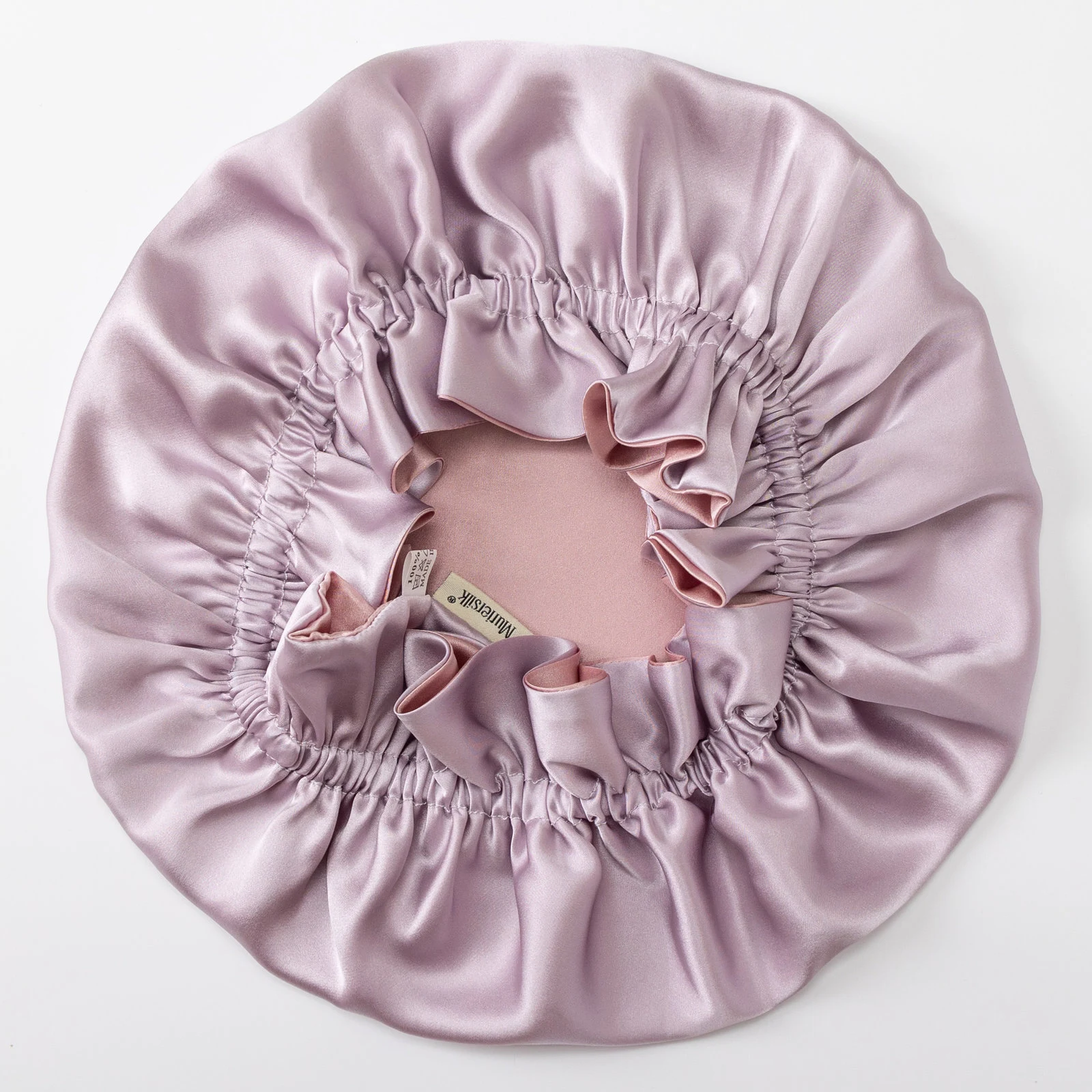
You've been told a hundred times to sleep in a bonnet. You finally decide to buy one, search online, and now you're staring at two options that look almost identical but cost completely different amounts. One says "silk," the other says "satin." They both feel smooth. So what's the real difference, and does it actually matter for your hair?
It does. And the answer might surprise you, because silk and satin aren't even the same type of thing.
The Quick Answer
Silk is a natural protein fiber. Satin is a weave pattern, usually made from polyester. A silk bonnet outperforms a satin bonnet in every measurable category: less friction, better breathability, superior moisture management, and longer lifespan. The only area where satin wins is upfront price.
What Is Silk, Exactly?
Silk comes from the Bombyx mori silkworm, which spins a cocoon out of two proteins: fibroin and sericin. Fibroin makes up about 75-80% of the silk thread and gives it that signature strength and smoothness. Sericin, the remaining 20-30%, acts as a natural gum that binds the filaments together (PMC, National Library of Medicine).
Here's where it gets interesting for hair care. Silk contains 18 amino acids, many of which overlap with the amino acids found in human hair keratin. That's not a marketing claim. It's chemistry. Glycine, alanine, serine, and tyrosine all appear in both silk fibroin and hair protein. When silk touches your hair, those amino acids have a natural affinity for your strands (Wikipedia - Silk Peptides).
Mulberry silk (the highest grade, and what you'll find in quality bonnets) also has a moisture regain of 11% at standard conditions. That means it can absorb up to 11% of its dry weight in moisture without feeling damp (Textile Triangle). For context, polyester absorbs less than 1%. This is a massive difference when your hair is trying to hold onto moisture all night.
If you want to feel the difference yourself, try a Mulberry silk bonnet from Muriersilk. The texture difference is obvious the moment you touch one.
What Is Satin?
This is the single biggest misconception in the hair care world. Satin is not a material. It's a weave.
A satin weave is a specific pattern where the thread passes over several warp threads before going under one, creating that characteristic smooth, shiny surface on one side. The material used in the weave can be anything: polyester, nylon, rayon, or yes, even silk.
But when you see a "satin bonnet" priced at $8-15, it's almost always polyester satin. The smooth surface comes from the weave structure and the synthetic fibers, not from any natural protein. Flip a polyester satin bonnet inside out and you'll notice the back side feels completely different, rougher, more plastic-like. That's because satin only creates smoothness on one side (Sino Silk).
The shine is different too. Silk's sheen comes from its trigonal fiber structure, which refracts light naturally, producing a soft, warm glow. Polyester satin reflects light more aggressively, giving it that almost-too-shiny, artificial look.
So when someone says "silk vs satin," what they really mean is "silk vs polyester." And that's a very different comparison. If you want to see what real silk satin looks like (yes, silk can be woven in a satin weave too), browse Muriersilk's collection where every bonnet is 100% Mulberry silk.
Head-to-Head Comparison
Here's how silk and satin bonnets stack up across the metrics that actually matter for your hair:
| Feature | Silk Bonnet | Satin (Polyester) Bonnet |
|---|---|---|
| Material | Natural protein fiber (silkworm) | Synthetic polyester weave |
| Breathability | Excellent, naturally temperature-regulating | Poor, traps heat against the scalp |
| Moisture management | Absorbs 11% of its weight, releases gradually | Absorbs less than 1%, repels moisture |
| Friction reduction | Up to 43% less friction than cotton | Less than cotton, but more than silk |
| Hypoallergenic | Yes, naturally free of chemicals | No, synthetic fibers may irritate sensitive skin |
| Amino acid content | 18 amino acids compatible with hair keratin | None |
| Durability | 1-2 years with regular use (up to 10 with careful care) | 6-12 months before noticeable wear |
| Price range | $30-60 | $8-20 |
| Best for | All hair types, especially curly and coily | Budget option for straight hair |
The friction number deserves special attention. Independent laboratory testing by the Textile Research Institute (TRI) measured friction between fabric surfaces and human hair using standardized methods. Silk produced up to 43% less friction than cotton, with satin falling somewhere in between (Mulberry Park Silks). Less friction means less mechanical damage, fewer split ends, and less frizz when you wake up.
Looking at a silk bonnet that checks all these boxes? Muriersilk bonnets are made from 100% Mulberry silk, the highest grade available.
Breathability: The Overnight Test That Changes Everything
This is one area that does not get enough attention, and it matters enormously for scalp health. When you sleep, your scalp releases heat and moisture. Any covering traps some of that warmth. The question is how well the material manages it.
Silk's protein fiber structure includes microscopic gaps that allow air to circulate while still protecting your hair. These gaps are large enough for vapor to pass through but small enough to retain warmth on cold nights. This is why silk feels cool in summer and warm in winter — it is a natural thermoregulator.
Polyester satin, by contrast, is essentially a plastic film with a smooth surface. It traps heat and moisture against your scalp with very few pathways for vapor to escape. Over a full night of sleep, this creates a warm, humid microenvironment directly against your skin. For people prone to scalp issues — dandruff, folliculitis, or general irritation — polyester satin can make those conditions worse, not better.
If you have ever woken up with a sweaty scalp after sleeping in a satin bonnet, the material is the reason. A silk bonnet keeps your head at a stable, comfortable temperature throughout the night because it breathes.
Which Is Better for Curly Hair?
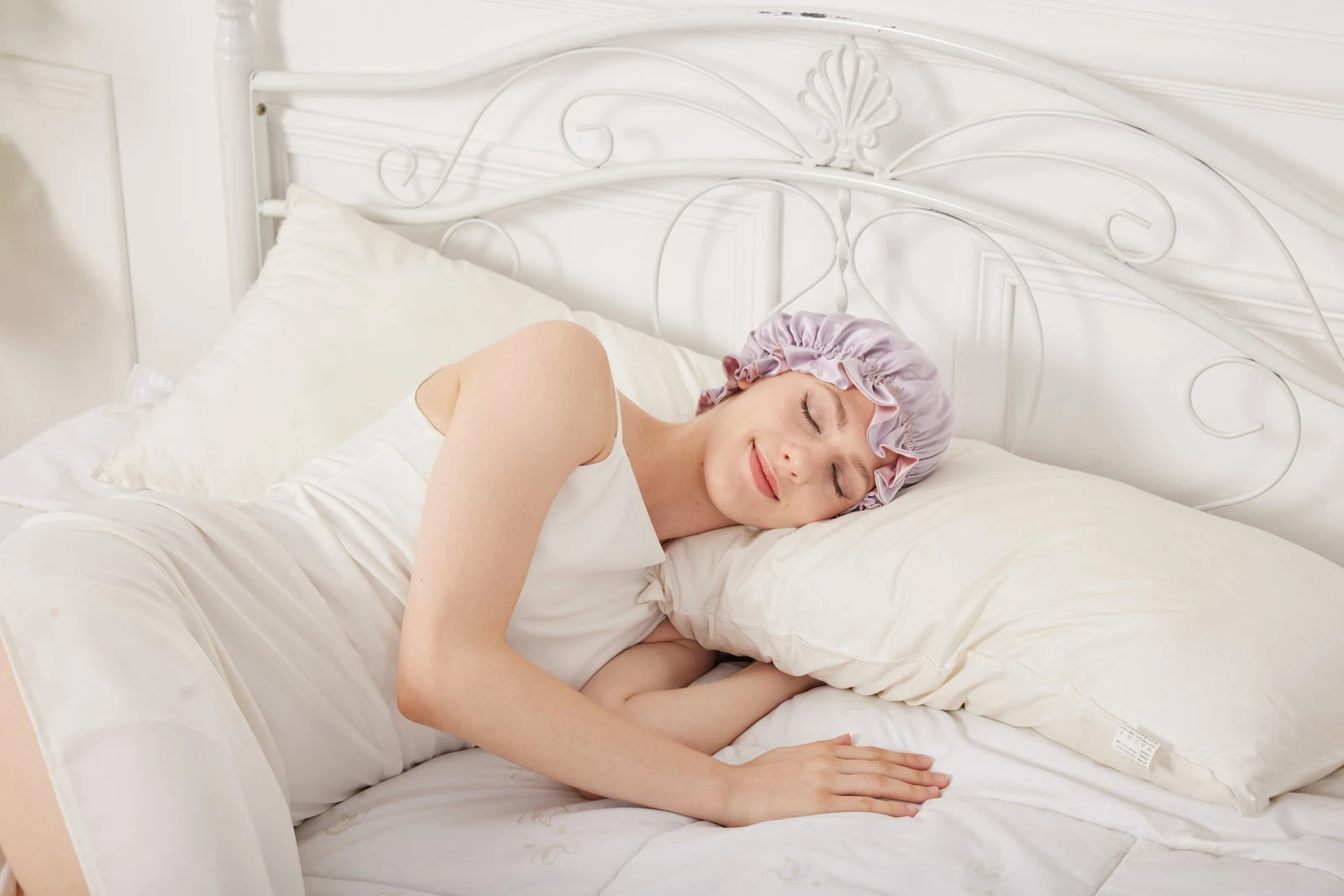
Silk wins here, and it's not close.
Curly and coily hair types face a specific structural challenge. The natural oils produced by your scalp have a harder time traveling down curved and coiled strands compared to straight hair. That means curly hair is inherently more prone to dryness. Any fabric that pulls moisture away from your hair, or creates friction against your curls, is working against you (The Silk Collection).
Polyester satin repels moisture. It sits on the surface of your hair without absorbing anything. While that sounds like it might keep your hair's moisture in, what actually happens is that sweat and humidity get trapped between the bonnet and your scalp with nowhere to go. The result is a warm, stuffy environment that can lead to scalp irritation and product buildup.
Silk, on the other hand, absorbs excess moisture and releases it gradually. It breathes. Your scalp stays at a comfortable temperature, your curls maintain their shape, and the products you applied before bed actually stay in your hair instead of transferring to the bonnet.
For curly hair specifically, the friction difference matters even more. Every point of friction is a potential frizz point. Silk's smoother surface means your curls slide against the fabric rather than catching and pulling. You wake up with defined curls instead of a halo of frizz.
The Ruffled Reversible Silk Bonnet is particularly good for curly hair because its generous size accommodates volume without compressing your curls flat. For the full curl-care system, see our complete guide to silk for curly hair.
Which Is Better for Straight Hair?
Silk is still the better performer, but the gap narrows for straight hair.
Straight hair distributes natural oils more evenly along the shaft, so moisture retention is less of a crisis. Friction is still a concern, though. If you've ever woken up with a crease or a weird bend in your straight hair, that's mechanical damage from friction and pressure during sleep.
A silk bonnet reduces those creases significantly. And because silk doesn't generate static electricity the way polyester does (thanks to its moisture absorption properties), you won't wake up with flyaways and static-charged strands.
That said, if you have straight hair and you're on a tight budget, a satin bonnet is still better than nothing. It's better than sleeping on a cotton pillowcase. But if you can swing the investment, silk gives you noticeably better results even on straight hair.
Check out the Long Half-Elastic Back Silk Bonnet for straight hair that needs room to lay flat without bunching.
Hair Type Breakdown: Who Benefits Most
Different hair types experience different levels of improvement from switching to silk. Here is a straightforward breakdown.
Type 1 (Straight): Benefits from reduced creasing, less static, and fewer flyaways. The improvement is noticeable but moderate compared to curlier types. If you heat-style your straight hair, silk helps preserve blowouts and flat-iron results overnight.
Type 2 (Wavy): Wavy hair is prone to losing its pattern overnight. A silk bonnet helps maintain wave definition by reducing friction that pulls waves apart. Moisture retention also matters here — wavy hair that dries out overnight goes flat.
Type 3 (Curly): This is where silk makes the biggest visible difference. Curly hair is friction-sensitive and moisture-dependent. A silk bonnet addresses both issues simultaneously. You can expect significantly less frizz and better curl definition after a single night.
Type 4 (Coily/Kinky): Coily hair benefits enormously from silk's moisture management. Type 4 hair is the most fragile and the most prone to breakage from friction. Every night in a silk bonnet is a night where you preserve length instead of losing it to mechanical damage. Protective styles like twists and braids also last longer under silk. For a Type-4 specific routine — pineappling, retention strategy, edge protection — see our silk bonnet guide for 4C and natural hair.
Chemically treated hair: If your hair is colored, relaxed, permed, or keratin-treated, it is already structurally weakened. Silk's reduced friction puts less stress on treated hair, helping to extend the life of your salon work.
The Price Question
Is Silk Worth the Extra Cost?
Let's do the math, because this is where the "silk is too expensive" argument falls apart.
A quality silk bonnet costs around $40. With proper care (hand washing every 1-2 weeks, air drying), it lasts 18-24 months of nightly use. That works out to roughly $0.06-0.07 per night.
A polyester satin bonnet costs around $12. It typically starts showing wear (fraying elastic, thinning fabric, pilling) within 6-8 months. That's roughly $0.05-0.07 per night.
The cost per use is nearly identical. But silk performs better across every metric: less friction, better breathability, superior moisture management, hypoallergenic properties, and 18 amino acids that actually benefit your hair.
You're also factoring in what you save on hair products. If your bonnet is doing a better job preserving moisture overnight, you use less leave-in conditioner, less anti-frizz serum, and less product overall. Several users report cutting their product usage by 20-30% after switching from satin to silk.
When you break it down per night, silk isn't a luxury. It's the smarter buy.
Browse the full silk bonnet collection at Muriersilk to find the right fit for your budget.
Care Comparison: Maintaining Each Material
How you care for your bonnet affects how long it lasts and how well it performs. Here is a side-by-side care comparison.
Washing frequency: Both silk and satin bonnets should be washed every 1-2 weeks with regular nightly use. More frequently if you use heavy hair products before bed.
Silk care: Hand wash in cool water with a pH-neutral or silk-specific detergent. Gently squeeze — do not wring or twist. Roll in a clean towel to remove excess water, then lay flat to air dry. Keep out of direct sunlight. Takes about 10 minutes of active work, plus drying time.
Satin (polyester) care: Machine washable on a gentle cycle. Can be tumble dried on low heat. This is easier, no question. But the fabric degrades faster with each wash cycle — the fibers lose their smoothness and begin to pill.
Longevity with care: A well-maintained silk bonnet lasts 18-24 months of nightly wear, and some users report 3-5 years with careful handling. A polyester satin bonnet typically needs replacing every 6-8 months because the elastic loses tension and the fabric develops rough spots where it pills.
Ironing: Silk can be steamed gently or ironed on the lowest heat with a pressing cloth. Polyester should not be ironed at high heat as it will melt. Most people do not iron their bonnets, but if you want yours looking fresh for travel, silk responds better to steaming.
For a detailed step-by-step, read Muriersilk's complete guide on how to wash a silk bonnet, or jump to our full silk care guide for product-by-product wash instructions.
What Hair-Care Practitioners Often Prefer
Many hair-care practitioners prefer silk over satin for overnight protection. The reasoning centers on three consistent points.
First, silk's amino acid compatibility with hair keratin is not something any synthetic material can replicate. Trichologists (hair and scalp specialists) point to silk's 18 amino acids as a genuine benefit, not just a marketing angle. These amino acids help maintain the hair's natural protein structure during the hours of friction that occur during sleep.
Second, dermatologists note that silk's breathability reduces the risk of scalp conditions that can develop under non-breathable coverings. Seborrheic dermatitis, folliculitis, and fungal infections thrive in warm, moist environments — exactly the conditions polyester creates against the scalp overnight.
Third, stylists who work with textured and natural hair consistently report that clients who switch to silk bonnets come in with less breakage and better moisture retention between appointments. The practical, visible difference in the salon chair confirms what the material science predicts.
How to Tell Real Silk from Fake
The market is full of products labeled "silk" that are actually polyester satin. Here are three reliable tests you can do at home:
1. The Burn Test
Pull a small thread from an inconspicuous area (like an inner seam). Light it with a match.
Real silk burns slowly, curls away from the flame, and often self-extinguishes when you remove the flame. It smells like burnt hair (because it's a protein fiber, just like hair). The residue is a fine, dark ash that crumbles easily between your fingers.
Polyester melts, drips, and burns with a chemical smell. The residue hardens into a small plastic bead that you can't crumble. (Sartor Bohemia)
2. The Hand Feel Test
Real silk feels cool to the touch and warms gradually with your body heat. It has a soft, fluid drape. Polyester satin feels slippery in a plastic-like way. It doesn't have that same cool-then-warm sensation.
Try rubbing the fabric between your fingers. Real silk creates a slight "crunching" sound, sometimes called the "silk scroop." Polyester slides silently. (Mulberry Park Silks)
3. The Ring Test
Take a piece of the fabric and try to pull it through a standard ring (like a wedding band). Real silk, even in heavier momme weights, is thin and flexible enough to slide through smoothly. Polyester satin tends to bunch up and resist.
This test works because silk fibers are incredibly fine, about 10 micrometers in diameter, thinner than a human hair. Polyester fibers are thicker and stiffer, so the fabric doesn't compress and slide the same way.
If you want to skip the detective work entirely, buy from brands that specify "100% Mulberry Silk" and list the momme weight (a measure of silk density). Quality bonnets are typically 19-22 momme. Anything that just says "silk" or "silky" without specifying the type and weight is probably polyester. For why momme matters and how 19 vs. 22 compares, see the momme weight guide. Every Muriersilk bonnet is made from 100% Mulberry silk with the momme weight clearly listed.
Caring for Your Silk Bonnet
Your silk bonnet will last years if you treat it right. Here's the short version:
Washing: Hand wash in cold water with a mild, pH-neutral detergent. No bleach, no fabric softener. Gently squeeze out water without wringing or twisting.
Drying: Lay flat on a clean towel and air dry. Keep it out of direct sunlight, which degrades silk proteins over time. Never put it in the dryer.
Frequency: Wash every 1-2 weeks if you wear it nightly. If you use heavy hair products, lean toward weekly.
Storage: Store in a breathable bag or drawer. Not in a plastic bag, which traps moisture and can cause mildew.
Following these steps can extend your bonnet's life well beyond the typical 18-24 month range. Read how to prevent silk shrinking and deformation for the temperature and agitation rules that protect the fibre. Some silk products, properly maintained, last a decade (Blissy).
Our Recommendation
Looking for an even deeper material breakdown across momme weights, brand price tiers, and the latest 2026 testing data? Read the extended silk bonnet vs satin bonnet 2026 comparison.
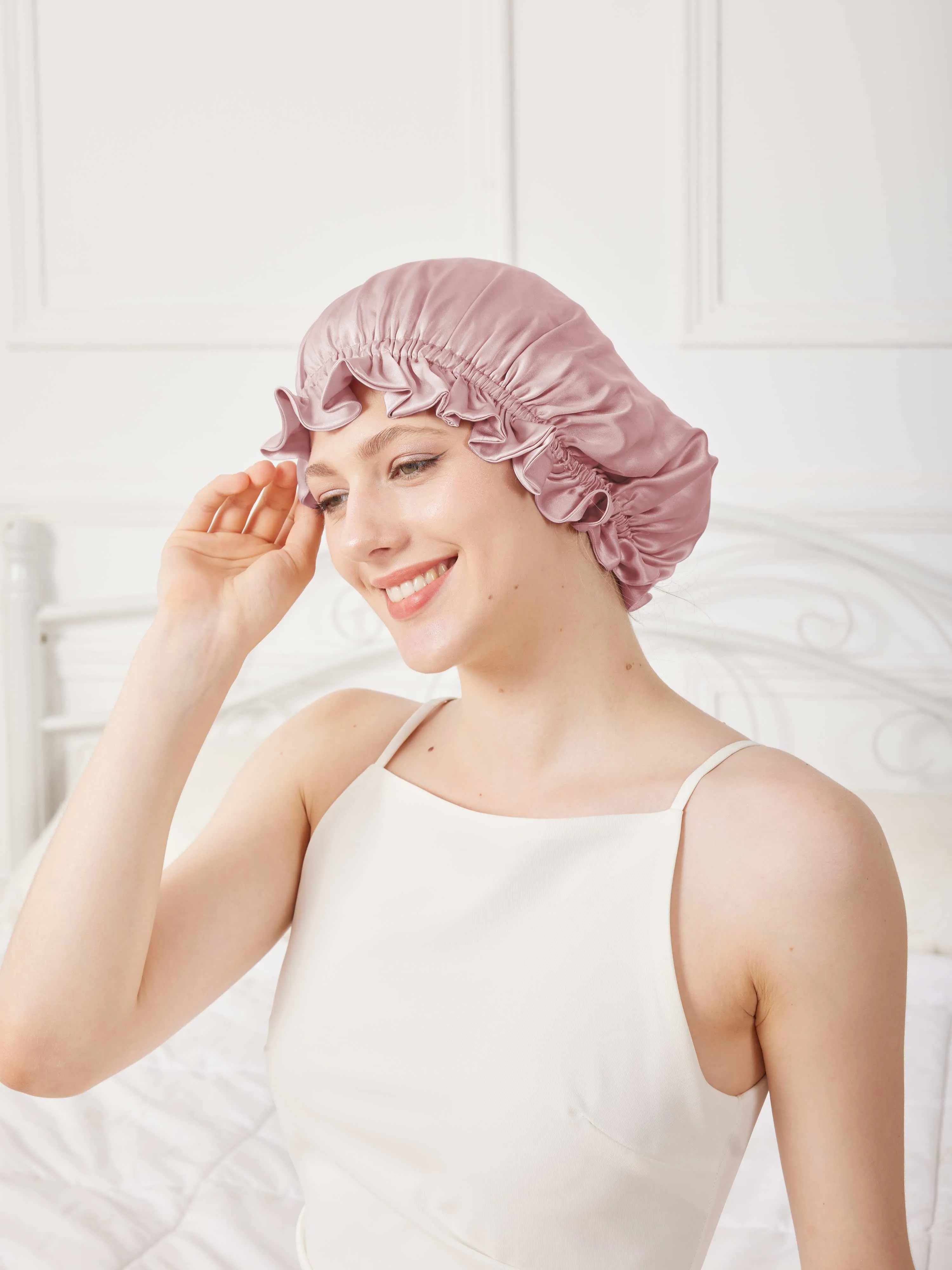
If you've read this far, you already know the answer. Silk is the better bonnet material by every objective measure. The only reason to choose satin is if your budget absolutely won't stretch, and even then, the cost-per-wear math makes silk a smarter long-term buy.
Here are three specific picks from Muriersilk's silk bonnet collection:
Best overall: Ruffled Reversible Silk Bonnet Generous fit with a ruffled edge. Reversible design means two color options in one bonnet. Great for curly, coily, and wavy hair that needs room.
Best for long hair: Long Half-Elastic Back Silk Bonnet Extended length accommodates longer hair without cramming it in. The half-elastic back keeps it secure without putting pressure on your edges. Unsure which size you need? Walk through head-circumference measurements in our silk bonnet sizing guide.
Best turban style: Tie-Back Silk Turban If you prefer a wrap-style fit over a traditional bonnet, this turban ties at the back for an adjustable, comfortable hold. Works well for locs, braids, and twists.
Frequently Asked Questions
Is a silk or satin bonnet better?
A silk bonnet is usually better for breathability and temperature comfort because mulberry silk is a natural fiber. Satin can still reduce friction, but it is often polyester.
Is satin the same as silk?
No. Satin is a weave; silk is a fiber. A satin bonnet may be made from polyester, while a silk bonnet uses natural silk fiber.
Does a satin bonnet work for curly hair?
Yes, satin can reduce friction for curly hair. Choose silk when you want a more breathable natural fiber and a cooler sleep feel.
Can I wear a silk bonnet with wet hair?You can, but it is not ideal. Silk handles moisture well (11% moisture regain), so it will not be damaged by damp hair. But sleeping on very wet hair in any bonnet can create a warm, moist environment that may lead to scalp issues over time. Lightly damp hair is fine. Soaking wet hair should be towel-dried first. Muriersilk has a detailed guide on wearing a silk bonnet with wet hair.
How often should I replace my silk bonnet?With proper care (hand washing, air drying), a quality silk bonnet lasts 18-24 months of nightly use. Replace it when you notice fraying, thinning fabric, or the elastic losing its hold. Some silk bonnets can last much longer, but the elastic tends to be the first thing to go. Many Muriersilk customers report getting 2-3 years of regular use before needing a replacement.
Is a silk pillowcase just as good as a silk bonnet?They serve different purposes. A silk pillowcase reduces friction on the side of your head that touches the pillow. A bonnet protects your entire head of hair, all the way around. If you move a lot in your sleep, a bonnet gives more consistent protection because it moves with you. For the best results, use both. Learn more about what a silk bonnet does for your hair.
Do silk bonnets help with hair growth?silk bonnets do not directly stimulate hair growth. What they do is reduce breakage, split ends, and friction damage. When your hair retains more length because it is not breaking off, it appears to grow faster. You are not growing more hair. You are keeping more of what you grow. Over six months to a year, this length retention can be significant, especially for fragile or textured hair types.
Can men wear silk bonnets?Yes. Hair protection is not gendered. If you have longer hair, locs, twists, braids, or any style you want to preserve overnight, a bonnet works regardless of gender. The Tie-Back Silk Turban is a popular unisex option that many men prefer for its wrap-style fit.
Sources
- Sericin Protein: Structure, Properties, and Applications - PMC, National Library of Medicine
- Silk Amino Acids - Wikipedia
- Silk vs. Cotton Lab Testing - Mulberry Park Silks / Textile Research Institute
- Moisture Absorption of Fibres - Textile Triangle
- Yarn Conditioning and Moisture Regain - Wikipedia
- How to Identify Genuine Silk from Fake Silk - Mulberry Park Silks
- Silk Burn Test Guide - Sartor Bohemia
- Silk vs. Satin Bonnet Analysis - Sino Silk
- Silk Bonnet for Curly Hair - The Silk Collection
- How to Wash Silk Bonnet - Blissy
- Natural Silk vs Polyester: Skin & Hair Science - Liu & Liu
- Increased Comfort of Polyester Fabrics - PMC
- How Natural Amino Acids in Silk Help Your Hair - Esme Luxury
General textile guidance only. Comfort varies by person and product; no fabric guarantees a sleep or medical outcome.