Can You Sleep in a Silk Bonnet With Wet Hair? The Definitive Guide (2026 Update)

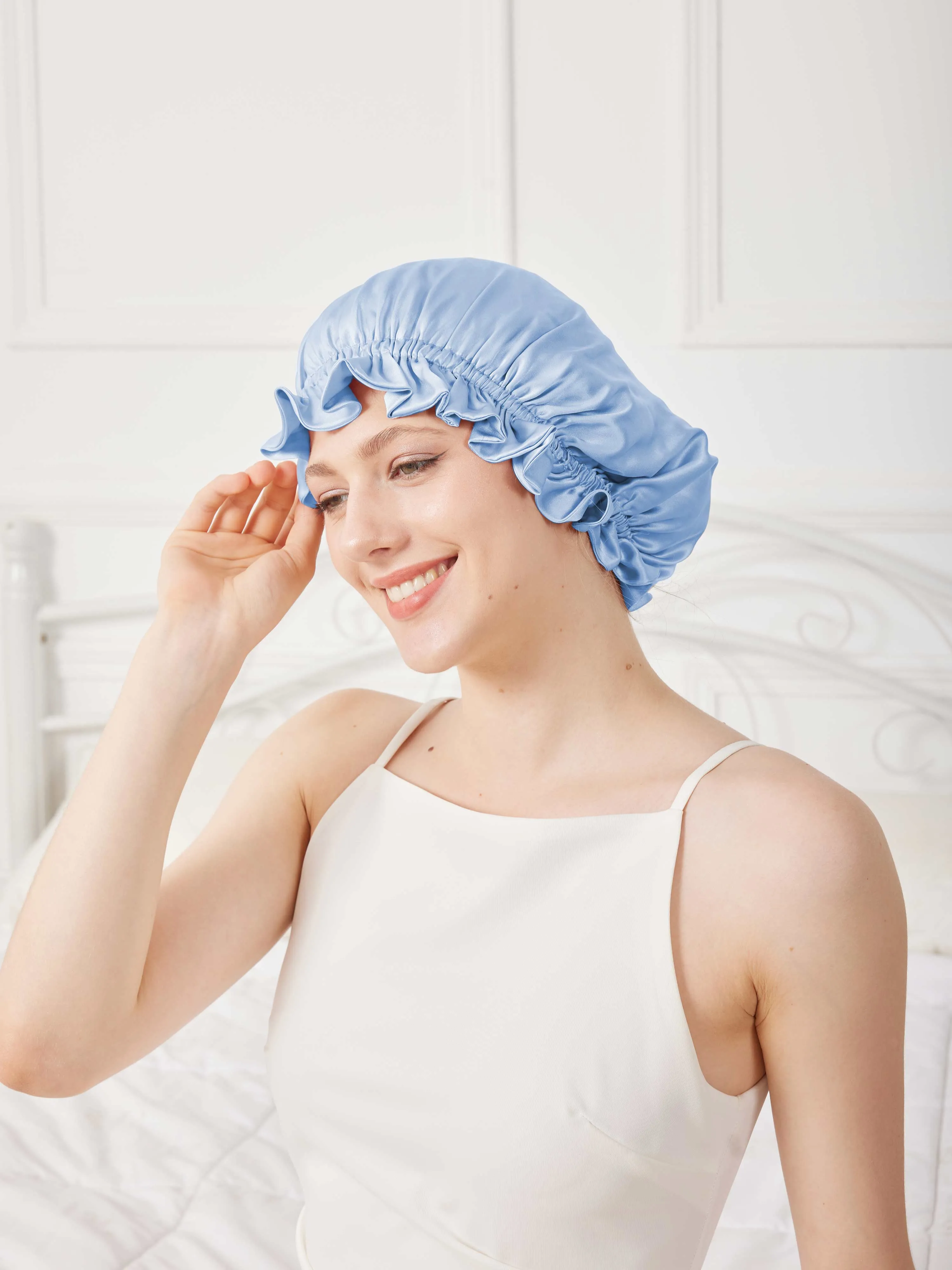
Woman with damp hair preparing to sleep in a 22-momme mulberry silk bonnet

Last updated April 2026 by the Muriersilk editorial team. Reviewed against 2024-2026 peer-reviewed dermatology and textile-science literature.

If you sleep in a silk bonnet and wash your hair at night, you have probably asked the same question thousands of people type into Google every month: is it actually safe to put a silk bonnet on wet hair? The short answer is that damp hair is fine — even beneficial — but soaking-wet hair is not. The long answer depends on your hair type, the momme weight of your bonnet, and your bedroom humidity. This guide walks through the science, the three real risks, a dermatologist-informed damp-hair method, and what to do for every hair type from 1A to 4C.

The Short Answer: Damp, Yes. Soaking Wet, No.

Sleeping in a silk bonnet with damp hair (towel-dried or air-dried to about 80% dry) is safe and can help lock in moisture for curly, coily and textured hair. Sleeping in a silk bonnet with soaking-wet hair — hair still dripping, or wet enough to saturate the bonnet — is not recommended. Wet hair is roughly 30% weaker than dry hair1, and a saturated bonnet creates the warm, humid micro-climate that fungi like Malassezia prefer2.

In the sections below we explain why, then give you a three-step method for using a silk bonnet on damp hair without breakage, mold, or scalp irritation.

Woman preparing her damp hair for an overnight silk bonnet routine

What Happens to Your Hair Follicle When It's Wet

Water changes hair at a structural level. Understanding this physics is the whole point — everything else follows from it.

Hygral fatigue: the swelling-and-drying cycle that weakens cuticles

When hair absorbs water, the cortex swells. When it dries, it shrinks. Repeated across days and weeks, this cycle — called hygral fatigue — stretches the cuticle scales and breaks the hydrogen and ionic bonds that hold hair proteins together3. The result is split ends, dullness, and porosity creeping upward over time. A 2003 study in the Journal of Cosmetic Science found coconut oil was the only tested oil that measurably reduced protein loss from hygral fatigue in both damaged and undamaged hair3 — which is why we recommend a light pre-bonnet oil for anyone bonneting damp hair regularly.

Why wet hair is ~30% weaker than dry hair

Cleveland Clinic dermatologists note that wet hair stretches up to 30% more than dry hair but is significantly weaker, and that friction from cotton surfaces can cause cuticle damage, split ends, and frizz1. This is the mechanical reason pulling wet hair into a tight bun, twist, or bonnet elastic is risky. A loose silk bonnet over damp (not wet) hair avoids the tension that causes mid-shaft snapping.

The 3 Real Risks of Sleeping With Wet Hair in Any Bonnet

These are the risks worth taking seriously — ranked by how often they actually happen.

Risk 1 — Scalp microbiome disruption (Malassezia overgrowth)

Malassezia is a yeast that lives on almost every human scalp. It becomes a problem when the scalp is persistently warm and humid — exactly the conditions you create by sealing wet hair inside any head covering overnight. A 2020 PubMed-indexed study of the scalp microbiome in seborrheic dermatitis found that Malassezia dominated the fungal community on the affected scalps studied4. Repeatedly going to bed with saturated hair trapped under a bonnet is one of the fastest ways to tip a balanced scalp into dandruff, flaking, or folliculitis1.

Risk 2 — Hygral fatigue and mid-shaft breakage

Wet hair held in any contained shape overnight — bonnet, braid, bun — swells unevenly against the elastic and the fabric, then contracts as it slowly dries. Over weeks this accelerates hygral fatigue on the outer layer of the style (where pressure is highest), producing the classic "ring of breakage" around the hairline and crown. This risk is real for everyone, but highest for high-porosity hair (Types 3C–4C) that already absorbs water quickly3.

Risk 3 — Mold and mildew inside synthetic vs. silk bonnets

This one is where the fabric matters. Synthetic satin (polyester) bonnets are essentially waterproof — they trap moisture against the scalp and the inside of the fabric. Real mulberry silk, by contrast, is a breathable protein fiber that wicks and releases moisture through the night. Even so, any bonnet that has absorbed water from soaking hair can grow mildew if it is not allowed to dry fully between wears. If you smell anything musty, wash the bonnet in cool water with a gentle detergent and air-dry before next use.

Why Silk Specifically Is Safer Than Satin or Cotton When Hair Is Damp

All three fabrics reduce friction to some degree, but only one is a natural protein fiber with clinically documented hair benefits.

Moisture-wicking properties of mulberry silk (sericin layer)

Mulberry silk is built from two proteins: fibroin, the structural core, and sericin, the outer glue-like layer. Sericin is hygroscopic — it absorbs atmospheric moisture and releases it gradually, which is why silk feels cool in summer and warm in winter. In topical hair-care formulations, silk-protein extracts have been studied for potential film-forming effects on the cuticle — though this applies to concentrated extracts in leave-in products, not to the trace proteins in a finished silk textile. A bonnet made from the same proteins works by the same mechanism, only externally: it regulates the micro-climate around your hair without sealing it.

Temperature regulation and friction: the published numbers

The friction-reduction mechanism is well-established in the peer-reviewed literature3. Brand in-house testing (Mulberry Park Silks, Blissy) has reported friction reductions in the 30-43% range for specific silk-vs-cotton comparisons; these figures are directional and are not independently peer-reviewed. A bonnet concentrates these effects because it wraps the hair completely instead of contacting only the scalp-facing side.

Cotton, by contrast, is highly absorbent and releases that moisture slowly — which is why cotton towels are great for drying hair and terrible for sleeping in. Polyester satin is smooth but hydrophobic, trapping sweat and scalp sebum against the skin.

Quick material comparison (damp-hair overnight)

FabricMoisture handlingFrictionSafe on damp hair?
22-momme mulberry silkWicks + releases slowly; breathableLowest (vendor lab tests report ~30-43% friction reduction vs cotton)Yes — the standard
Polyester satinHydrophobic; traps moisture against scalpLow friction but no micro-climate controlOnly if hair is barely damp
CottonHighly absorbent; releases moisture slowlyHigh friction — causes cuticle damage on wet hairNo
Bamboo viscoseDecent wicking, variable qualityMedium frictionAcceptable, not ideal

Shop the science: our 22-momme mulberry silk bonnets are OEKO-TEX Standard 100 certified and use undyed, long-fiber mulberry silk on the inner layer so the fabric that touches your hair is as breathable as possible.

Why momme weight matters for damp-hair use

Momme (pronounced "mum-ee") is silk's equivalent of thread count. It measures weight: a 22-momme fabric weighs 22 pounds per 100 yards at a standardized width. For bonnets used on damp hair, 22 momme is the practical minimum — lighter silks (16-19 momme) saturate faster, pill with repeated washing, and lose their protective film sooner. Our full momme guide explains the 19 vs. 22 vs. 25 momme trade-offs for different uses.

The 3-Step "Safe Damp-Hair Bonnet" Method

This is the method curl experts and trichologists actually recommend. It takes about ten minutes at the end of your evening routine.

  1. Towel-plop with a microfiber or cotton T-shirt for 10–15 minutes. Skip terry cloth — the loops catch on the cuticle and cause frizz. The goal is to remove the top 40-50% of surface water so your hair is damp, not dripping. You should be able to squeeze a section without water running down your fingers.
  2. Apply a leave-in or light oil. A pea-sized amount of a jojoba or coconut-based leave-in reduces hygral fatigue by slowing how much additional water the shaft absorbs overnight3. For low-porosity hair, skip the heavy oils and use a water-based leave-in instead.
  3. Loosely gather hair and bonnet. Never pull damp hair into a tight pineapple or twist under the bonnet — that is where mid-shaft breakage starts. Use a soft scrunchie if you need to contain length, and make sure the bonnet's elastic sits above the hairline, not on it.

In the morning, remove the bonnet first thing and let it air out (do not ball it up in a drawer). Your hair should be about 90% dry; finish with a cool shot from a hair dryer if needed.

What to Do by Hair Type (1A–4C)

The damp-hair rules change by curl pattern and porosity. Here is the practical guidance.

Fine/straight hair (1A–2A)

Fine hair holds less water overall but is also more fragile when wet. Sleep with hair no more than 80% dry. Skip oils if your hair goes limp — use a silicone-free leave-in mist instead. A lightweight silk bonnet with a gentle elastic is all you need.

Wavy hair (2B–2C)

Wavy hair benefits most from the "pineapple" method — but only with dry or barely-damp hair. For wet-ish 2B–2C, gather hair loosely at the crown with a silk scrunchie, bonnet on top. This preserves wave definition without tension breakage.

Curly hair (3A–3C)

This is where damp-hair bonneting shines. Plop with a cotton T-shirt, apply leave-in, then bonnet loosely. Our ruffled reversible silk bonnet is sized for Type 3 curl volume without squishing definition.

Coily/4C hair

4C hair is typically high-porosity — it absorbs moisture fast and loses it fast. The "LOC method" (liquid, oil, cream) pairs naturally with a damp bonnet routine: the bonnet prevents the overnight evaporation that normally undoes your leave-in. Choose a larger-capacity bonnet with a satin-lined elastic tie so protective styles fit without compression. Our long half-elastic back bonnet is the most popular choice for 4B/4C customers because the extra fabric length accommodates braids, twists, and wash-n-gos.

Protective styles (braids, locs, twists, wigs)

Protective styles need the largest bonnet capacity. With damp braids or twists, the rules change slightly: because each section is already wrapped, the hair inside each braid dries more slowly than free hair. Give protective styles an extra 30-60 minutes of air-drying before bonneting, and rotate three bonnets rather than two so each has a full 48 hours to air-dry. Never bonnet a freshly-wet wig — synthetic fibers hold moisture against the cap and can encourage mildew on the wig lining.

Bleached, color-treated, or chemically relaxed hair

Chemically processed hair has elevated porosity regardless of curl pattern, which means it absorbs water faster and suffers hygral fatigue faster3. Treat color-treated hair like 4C for the purpose of this guide: drier before bonneting, lighter leave-in, looser fit. A protein-rich leave-in once a week also helps offset the cortical-protein loss that hygral fatigue accelerates on bleached strands.

Signs You Should Remove Your Bonnet Immediately

  • Itching or burning scalp — usually a sign that moisture plus product has irritated the skin. Remove, rinse scalp, air dry.
  • Musty smell on the bonnet — mildew starting. Wash the bonnet; air-dry hair longer next time.
  • Visible dampness on the outside of the bonnet in the morning — your hair was too wet when you put it on. Use a drier pre-dry stage tomorrow.
  • A "wet dog" or yeasty smell from the scalp — possible Malassezia imbalance. Take a bonnet break for 3–5 nights, use an anti-fungal shampoo (ketoconazole or piroctone olamine) if persistent2.

How to Wash Your Bonnet After Damp-Hair Use

Bonnets used on damp hair need washing more often than bonnets used on dry hair — aim for every 2-3 wears instead of weekly. Hand-wash in cool water (below 30°C / 86°F) with a pH-neutral silk detergent, roll in a towel to remove water (never wring), and air-dry flat, out of direct sunlight. Machine washing on a silk cycle is acceptable for branded 22-momme bonnets with reinforced stitching, but hand-wash is always safer. For the full protocol, see our silk care guide — it covers temperature, detergent, and drying specifically for 22-momme mulberry silk.

Rotation rule: own at least two bonnets, ideally three, if you bonnet damp hair most nights. This gives each bonnet 48-72 hours of air circulation between wears — the single biggest factor in preventing the mildew problem described above.

Why 22 momme matters here: Heavier silk (22-momme and above) has a tighter weave that holds up to frequent washing. Lower momme-weight silks (16-19 momme) pill and thin out faster when washed often. See our momme weight guide for the full comparison.

Our Recommended Bonnets for Damp-Hair Use (2026)

All three below are 22-momme mulberry silk, OEKO-TEX certified, and designed with damp-hair routines in mind.

  • Long-Tie Silk Bonnet (Bowtie) — The adjustable bow lets you set the tension exactly, which matters most when hair is damp and you want zero elastic compression on the hairline.
  • Ruffled Reversible Silk Bonnet — Our top pick for Type 3 curls. The double-layer construction extends the window during which damp hair stays safely within the "just damp" zone.
  • Long Half-Elastic Back Silk Bonnet — The go-to for 4B/4C, locs, braids, and wash-n-gos. Extra fabric length accommodates protective styles without compression.

Shop all 22-momme silk bonnets →

Related Reading

FAQ

Can you sleep in a silk bonnet with wet hair every night?

No — not if "wet" means soaking wet. Damp hair (about 80% dry) is safe nightly for most hair types, especially 3A-4C curl patterns, as long as you use a breathable 22-momme mulberry silk bonnet and let the bonnet air-dry between uses. Fully saturated hair every night increases the risk of scalp dysbiosis and hygral-fatigue breakage2.

Is it bad to put damp hair in a bonnet?

Damp is the ideal state for bonneting if your goal is overnight moisture retention. The key is damp, not wet: no dripping, no visible water on the outside of the bonnet in the morning, no tension elastic. Damp-hair bonneting is how many Type 3 and Type 4 curl routines preserve definition overnight.

Does a silk bonnet dry your hair overnight?

A breathable mulberry silk bonnet will allow hair to dry overnight — slower than uncovered, but meaningfully. If you start at 70-80% dry, you'll typically wake up at 95%+ dry. A synthetic satin bonnet, by contrast, traps moisture and slows drying significantly.

Should I air-dry my hair before putting on a bonnet?

Yes — aim for about 80% dry before the bonnet goes on. That usually means 15-30 minutes of air-drying (or a 10-minute microfiber plop) after your last towel dry. You want your hair damp to the touch but not leaving water on your palm when you press a section.

Can wet hair in a bonnet cause mold or scalp issues?

It can, if the hair is truly wet (not damp) and the bonnet is worn every night without drying between wears. Cleveland Clinic dermatologists note that the warm, moist environment of sealed wet hair promotes bacterial and yeast growth, contributing to folliculitis and dandruff1. Silk is more forgiving than synthetic satin here because it breathes, but no bonnet can fully compensate for chronically soaking hair.

Common Mistakes We See (And How to Fix Them)

  • Bonneting hair that's still dripping. The fix: add a 10-minute microfiber plop before the bonnet. "Damp, not dripping" is the single most important rule in this guide.
  • Wearing the same bonnet every night for weeks. The fix: rotate 2-3 bonnets, and wash every 2-3 damp-hair wears.
  • Pulling damp hair into a tight pineapple under the bonnet. The fix: use a silk scrunchie only loosely enough to contain length; let the bonnet do the wrapping work.
  • Using a synthetic "satin" bonnet and assuming it behaves like silk. The fix: check the label. Real mulberry silk will be listed as "100% mulberry silk" with a momme weight. Polyester satin traps moisture and sebum.
  • Adding heavy oil to low-porosity hair before bonneting. The fix: water-based leave-ins for low porosity; oils for high porosity. A product that sits on top of the hair all night without absorbing is a recipe for greasy roots and an unhappy bonnet.

The Verdict

A silk bonnet on damp hair — 80% dry, no dripping, no tight elastic — is one of the best overnight hair-protection habits you can build, especially if you have Type 3 or Type 4 hair. A silk bonnet on soaking-wet hair is not worth the breakage or the scalp risk. Use the three-step method above, rotate at least two bonnets so each has time to air-dry between wears, and stick with real 22-momme mulberry silk rather than polyester "satin."

Ready to build the routine? Browse our 22-momme mulberry silk bonnets →


Sources

  1. Cleveland Clinic — "Can Wet Hair Actually Make You Sick?"
  2. Tao et al., "Skin microbiome alterations in seborrheic dermatitis and dandruff: A systematic review," Experimental Dermatology, 2021 (PubMed)
  3. Dias MFRG, "Hair Cosmetics: An Overview," Int. J. of Trichology, reviewing Rele & Mohile, Journal of Cosmetic Science, 2003 (PMC/NIH)
  4. Lin Q et al., "Malassezia and Staphylococcus dominate scalp microbiome for seborrheic dermatitis," Bioprocess and Biosystems Engineering, 2020 (PubMed)
Silk Bonnets

Shop the Collection

Explore Our Silk Bonnets

Premium mulberry silk bonnets for overnight hair protection. Reduce frizz, prevent breakage. Free shipping over $150.

Sign up for exclusive offers

Stay informed about new products, silk care tips, and special promotions.